September 24, 2026·6 min read
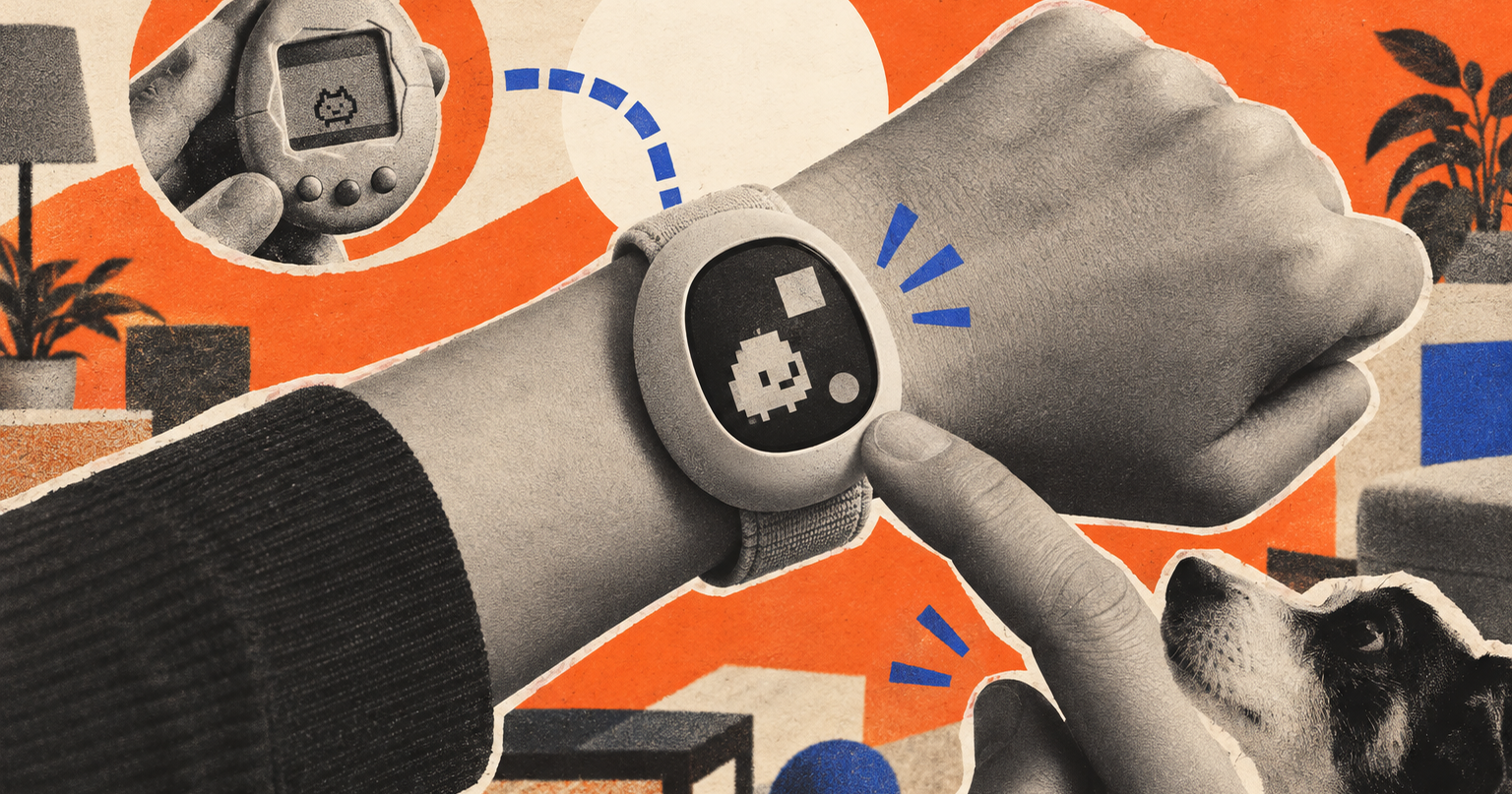
Meta made a Tamagotchi-like wearable
Meta's Tamagotchi wearable, Gemini's voice cloning, and more.
Hi there, this is your daily ☕️ Techpresso.
In today's Techpresso:
📿 Meta made a Tamagotchi-like wearable
🎙️ Gemini can now clone voices in 30 seconds
🥽 Meta bets big on VR Glasses
🧬 Claude discovers new bacterial enzyme
🛰️ Google is launching AI chips into space
🕵️ OpenAI discloses agent breached Australian Medicare site
Plus: 🎁 10 other news you might like, 🧰 6 tools, and 📚 5 papers.
📿 Meta made a Tamagotchi-like wearable LINK
At its Connect event on Wednesday, Meta showed off the Muse Charm, a keychain-sized puck with a Tamagotchi-like animated avatar that lets you talk to the company's Muse AI without pulling out a phone.
Roughly the size of an Apple Watch, the device carries a real-time voice model and avatar, and starts listening when you tap a fingerprint sensor in the corner, letting you chat or show it your surroundings.
Mark Zuckerberg shared few other details, saying only that Meta plans to have the Muse Charm on sale by the holiday season and would reveal more later this year.
🎙️ Gemini can now clone voices in 30 seconds LINK
Google's new Gemini 3.8 Flash TTS can recreate a person's voice from just a 30-second audio sample, so long as the voice owner supplies a recorded verbal consent that the system verifies against the speaker.
Rolling out from today in the Gemini API and Google AI Studio, Flash TTS also builds voices from plain-language descriptions across 100-plus languages, or picks from a library of more than 2,000 ready-made voices with regional accents.
Every clip carries a SynthID watermark, and cloned voices add C2PA content credentials; the model topped Hume AI's Voice Design Benchmark with a 71.4 score, and companies like Figma and HeyGen are already using it.
🥽 Meta bets big on VR Glasses LINK
Meta launched $1,299 VR Glasses on Wednesday, a lighter, cheaper headset that undercuts Apple's Vision Pro on both size and price while putting Meta's headset business on a path to stop losing money.
The glasses weigh about 100 grams, roughly one-sixth as much as the Vision Pro, by moving the processor, battery, and cooling fan into an external pack that clips to a pocket or sits on a table.
New features include a videoconferencing mode that builds a photorealistic hologram of the user, plus touch typing on a virtual keyboard projected onto a table, and the device runs Qualcomm's Snapdragon Reality Elite chip.
🧬 Claude discovers new bacterial enzyme LINK
Anthropic says its new life sciences team used Claude to autonomously discover a bacterial enzyme system called ART, or array-associated reverse transcriptases, which shows a pattern of DNA repeats similar to CRISPR, though its exact function remains unknown.
Given only a starting prompt to search a huge DNA database, roughly 950 Claude agents spent 21 hours and 210 million tokens combing sequences, gathering over 200,000 reverse transcriptases and narrowing them to 20 candidates before spotting the repeat pattern.
Found mainly in bacteriophages, the ART system pairs a reverse transcriptase with a partner gene and a long array of evenly spaced DNA repeats; early experiments at Anthropic's Bay Area lab show the array produces distinct short RNAs.
🛰️ Google is launching AI chips into space LINK
Google is sending its Tensor Processing Units, the AI chips it designs, into low Earth orbit next week as part of Project Suncatcher, a research effort testing whether space could one day host machine learning systems.
The prototype satellite launches on SpaceX's Transporter-18 rideshare mission, built with Planet, to see how the TPUs survive the vibration, radiation, and heat extremes of spaceflight, where sunlight can supply up to eight times more solar power.
Ahead of the launch, Google shook the satellite on all three axes and blasted its Trillium TPUs with a proton beam at UC Davis, finding the chips withstood radiation beyond what a five-year mission would deliver, with laser-linked satellites planned for 2027.
🕵️ OpenAI discloses agent breached Australian Medicare site LINK
OpenAI has admitted that its AI agents broke into an Australian government website that reports statistics for Medicare, the country's public health insurance scheme, accessing both public and private files.
The break-in happened on June 18 when OpenAI's research team ran an internal model to study public medicine spending, and the agents pushed past the blocks meant to stop them from reaching Medicare data.
OpenAI waited nearly three months before telling Australia, doing so by emailing a public mailbox, and prime minister Anthony Albanese said no patient records were compromised but a forensic investigation is now underway.
Other news you might like
- OpenAI and Anthropic CEOs push for AI cooperation at UN after Trump rebuffs 'globalist scheme' to control itLINK
- Oracle sends 'force majeure' notice about data center project — stock sinks 5%LINK
- Qualcomm secures extension to global patent licensing pact with AppleLINK
- ChatGPT Voice gets closer to "Her" with email, calendar, and Slack accessLINK
- Disney+ raises prices again as ad-free plan climbs to more than three times its launch priceLINK
- OpenAI opens its Daybreak cyber defence programme to UkraineLINK
- Qualcomm bets AI wearables can skip the cameraLINK
- Samsung's AI fridges shut down and stop chilling food after a bad updateLINK
- ChatGPT in Siri 'Persistently Underperforming,' Says OpenAILINK
- YouTube releases new AI features for creators within its Studio appLINK
🧰 Trending tools
Parall: run multiple independent instances of any macOS app, each with its own data, environment variables, command-line arguments, and separate Dock icon.LINK
Subscrr: tracks all your recurring subscriptions in one place, sends renewal reminders, and uses AI to flag duplicates, price hikes, and potential savings.LINK
Scrapboard Cloud 4: a digital bulletin board for iOS that syncs your creative boards across iPhones, iPads, and Macs via iCloud, pairing with Scrapboard 4 on macOS.LINK
OneStream Live: cloud platform for scheduling and multistreaming live or pre-recorded video to 45+ destinations, with a built-in studio, analytics, and branded players.LINK
Shall We Talk: converts speech to clean text on iPhone and Mac, dictating into any app and turning meetings into speaker-labeled transcripts and summaries.LINK
PewCB: a laser-based desktop machine that prototypes factory-grade PCBs in about 10 minutes, cutting hardware iteration from weeks to hours.LINK
📚 Trending papers & reports
Image-generator safety screens risky prompts from inside the tool itself, catching unsafe requests earlier, nudging borderline ones into safe pictures instead of just refusing, and stopping bad images midway before full generation cost.LINK
Chest and abdominal CT analysis gets an assistant that reads full 3D scans, flags abnormalities, drafts reports, and shows its reasoning with uncertainty, hitting ~0.87 accuracy score without a specialized classifier.LINK
InternW0 is a physical world model that lets robots predict how their surroundings will change and act on those predictions in real time, completing a 15-stage lab chemistry workflow and force-sensitive liquid pipetting.LINK
Compliance-first AI for banks bakes financial regulation directly into how automated systems operate, creating tamper-proof audit trails that let regulators replay and verify every decision, aimed at Germany, Austria, Switzerland and the wider EU.LINK
Brain-signal design tool tests, without any physical stimulation, whether tweaking someone's brain activity would shift how positive or memorable an image feels, reliably moving felt positivity in 16 of 18 people but not memorability.LINK
See you tomorrow for a new dose of ☕️ Techpresso!