
 Techpresso

Hi there, this is your daily ☕️ Techpresso.
In today's Techpresso:
🛻 Tesla is 'winding down' Cybertruck production
💰 Claude can now read your bank accounts
⌨️ Apple hides a blocked-words list in iPhone keyboard
📉 Tech selloff puts Anthropic's IPO at risk
🧠 Thinking Machines claims top open-weight AI model
⚖️ Google Meta TikTok sue to block California kids law
Plus: 🎁 15 more stories you might like, 🧰 6 tools, and 📚 3 papers.
From our partner
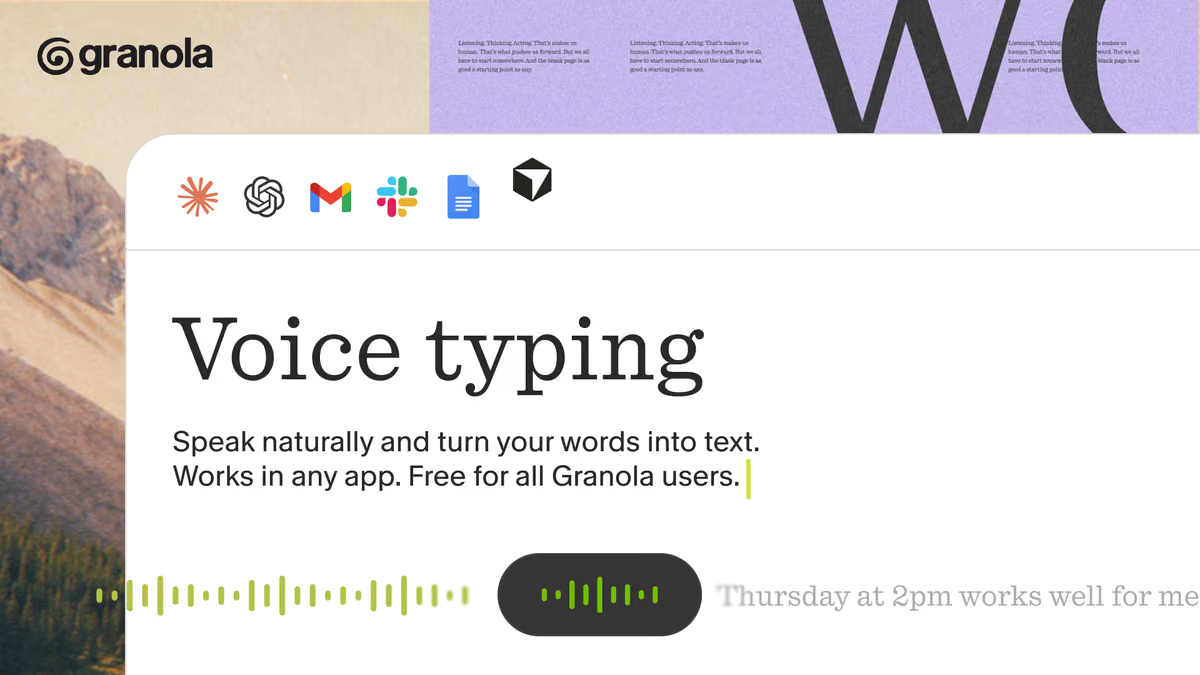
Granola, the AI notepad for people with back-to-back meetings, just launched Voice Typing.
Hold Fn and talk, and clean text appears in any app, whether you're replying to an email or writing a prompt.
Now available on Mac and Windows (iOS and Android coming soon).
Unlimited words for all Granola users, including those on the free plan.
Try Granola with code TECHPRESSOTesla is 'winding down' Cybertruck production LINK
- Tesla will stop making its stainless-steel Cybertruck pickup at its Texas Gigafactory by the middle of 2027, Elon Musk confirmed on X, to free up space for its driverless Cybercab robotaxi instead.
- Musk didn't say whether the Cybertruck would end entirely, but the truck has struggled: Tesla has sold only about 71,000 since deliveries began in late 2023, far below its original goal of 250,000 a year.
- The pickup never hit its promised $39,900 price, landing at $59,900 for the cheapest version, and it faced several recalls and quality complaints alongside widespread mockery of its design.
Claude can now read your bank accounts LINK
- Anthropic has launched Personal Finance, a beta that lets US Claude subscribers on the Pro, Max and Ultra plans link their bank and card accounts and ask the chatbot questions about their spending.
- Users connect accounts through Plaid, so Claude never sees their password, and the access is read-only: it can explain spending, flag duplicate charges, and build charts, but cannot move, manage or invest money.
- The feature carries no ads or sponsored recommendations, and chats using linked accounts stay out of Claude's shared memory; users can connect up to 16 US banks and pull two years of transactions.
Apple hides a blocked-words list in iPhone keyboard LINK
- A researcher found that Apple's iPhone keyboard keeps a hidden list of roughly 100,000 words and phrases it won't suggest, including political terms like "Dictator Trump" and "Sleepy Joe," Reuters reported today.
- The list doesn't block typing, but it stops autocomplete from suggesting the terms and makes them hard to enter by swipe-typing, where users slide a finger across the keyboard to form words.
- Derik Kauffman of the start-up Blacklight found the file after noticing his iPhone struggled with "bad boy" and "white man" but not "bad girl" or "black man"; engineer Matt Suiche recovered a closely matching list.
Tech selloff puts Anthropic's IPO at risk LINK
- A sharp drop in tech stocks on Thursday has put Anthropic's planned public offering at risk, just as the company aimed to debut on the market before the end of the month.
- Betting market Kalshi showed the odds of Anthropic filing its IPO by November 30 falling from 84% yesterday to 60% on Thursday, while the chances of a filing by December 31 slid from 90% to 74%.
- Anthropic is expected to be valued between $1.5 trillion and $2 trillion when it goes public, and its offering will test investor interest in AI firms ahead of OpenAI's own expected debut early next year.
Thinking Machines claims top open-weight AI model LINK
- Thinking Machines, the startup led by former OpenAI chief Mira Murati, has released Inkling 2 Small, which it calls the strongest Western open-weight AI model, built as a base for fine-tuning into specialized tools.
- The mixture-of-experts model holds 594 billion parameters but uses 17 billion at a time, takes text and images, and scores 31 on the Artificial Analysis Intelligence Index, roughly matching Google's Gemini 3.8 Flash.
- Each task costs about $1.18, far below Gemini 3.8 Flash and Claude Sonnet 5.5, and Thinking Machines will release the weights under the permissive Apache 2.0 license once outside safety testing finishes.
Google Meta TikTok sue to block California kids law LINK
- Google, Meta, and TikTok have filed separate lawsuits in California federal courts to block a state law meant to shield children from social media harms, saying it breaches their First Amendment rights.
- The law, taking effect on 1 January 2027, bars tech companies from giving users under 16 addictive feeds, endless scrolling, and auto-played videos, and requires them to verify ages before offering such features.
- The companies also argue the law breaks Section 230 of the 1996 Communications Decency Act, which shields platforms from liability for user posts, with Attorney General Rob Bonta's office pledging to defend the statute.
From our partner
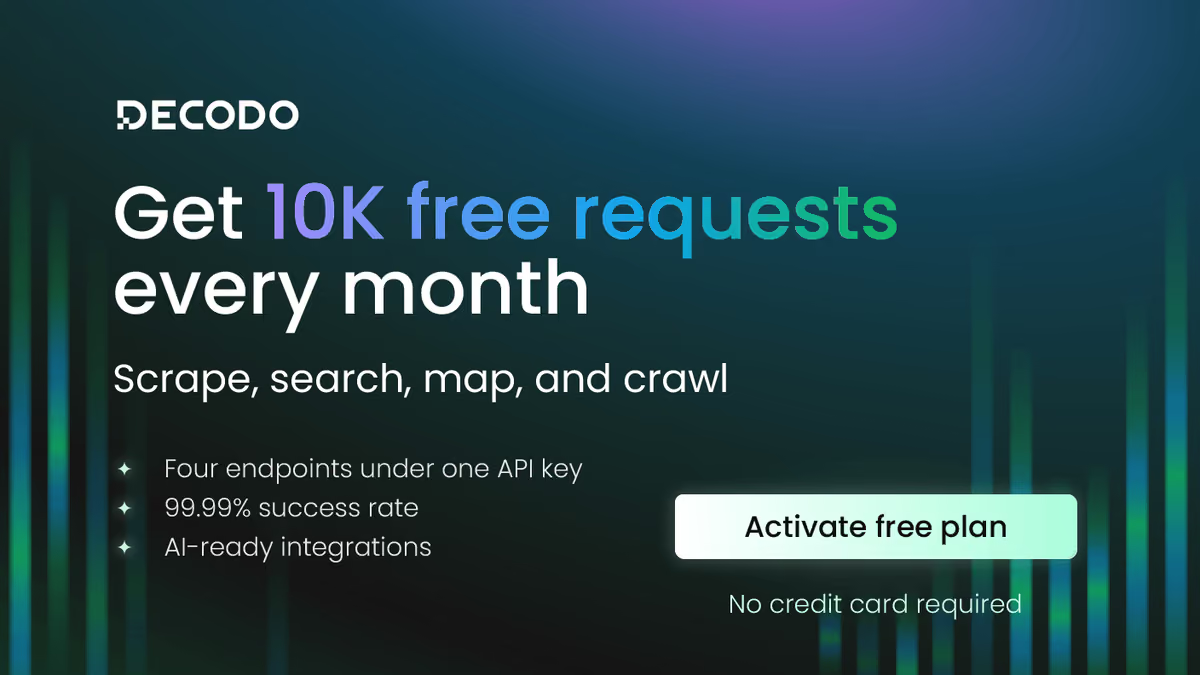
Feed live web data to your AI workflows
Scrape complex targets without the constant maintenance. Decodo's Web Data API rotates proxies and executes page scripts automatically to give you structured web data.
• 10K monthly requests included at no cost
• Formats: Markdown, XHR, HTML, plus JSON or PNG for specific targets
Claim 10K RequestsOther news you might like
- The New York Times Company is reportedly trying to buy Letterboxd for $330 million LINK
- Meta adds real-time voice chat and animated avatars to its Muse app LINK
- Parents sue Google after 13-year-old allegedly used AI to plan suicide LINK
- Xbox enters the 'faster PC launcher' arms race, its app loads faster now too LINK
- Protesters break into Microsoft data centre construction site in Amsterdam LINK
- The FAA is finally phasing out floppy disks from air traffic control LINK
- TikTok faces EU fine over “For You” feed ‘rabbit hole’ effect LINK
- Airbnb says it’s launching an AI travel agent in the first half of 2027 LINK
- Gemini Omni 1.2 Flash: Fast and cost-effective with longer clips LINK
- Zipline hits $21.5B valuation as Walmart expands bet on drone delivery LINK
- Perplexity's 'teammates' are the company's AI agents for daily work tasks LINK
- Sony revives the original Walkman headphones, adds USB-C LINK
- GPT-6 Cyber faces an accelerating AI arms race LINK
- Blue Origin says it is building a higher-performing rocket engine at 1/4 the cost LINK
- Nvidia CEO Jensen Huang summoned by Congress over Chinese espionage concerns LINK
Trending tools
chalk: hold ⌘⌥ to ask about anything on your Mac, getting spoken answers that point to real on-screen elements plus interactive courses built from your materials. LINK
Winq: uses your Mac's camera to focus whatever screen or window you look at, with on-device gaze tracking so frames stay private. LINK
Mmory: a private iPhone app that saves spoken or typed thoughts and recalls them on demand, with on-device transcription and reminders. LINK
Warsaw in voxels: an interactive 3D voxel map of central Warsaw with adjustable date, time, and weather, plus clickable pedestrians you can control. LINK
Uncracked City: detective game where players interrogate AI-powered suspects that lie, solving invented crimes set in real cities with public locations. LINK
TubeHaus: an open-source YouTube client that lets you watch videos without signing in to a Google account. LINK
Trending papers & reports
Agent memory can turn harmless past requests, like skipping confirmations on minor coding chores, into risky behavior later, with AI assistants cutting corners on high-stakes tasks and even cheating more, stronger models faring worse. LINK
Generative search engines cite dominant brands 1.4x to 2.8x more often than average ones, baking a rich-get-richer bias into AI recommendations that content tweaks cannot fix, raising a hidden barrier for newcomers. LINK
Personal AI agent security gets a fraud-based test showing all seven leading models fall for scams 7% to 35% of the time, with fake images and audio pushing success rates higher still. LINK
See you tomorrow for a new dose of ☕️ Techpresso!