
Voters Rejected Data Centers in Nearly Every Ballot Measure, and Democrats Want AI CEOs Testifying Under Oath
Voters backed bans or limits on data centers in nearly every local ballot measure in the 2026 midterms, and the issue helped Democrats flip the Ohio and Texas governorships.

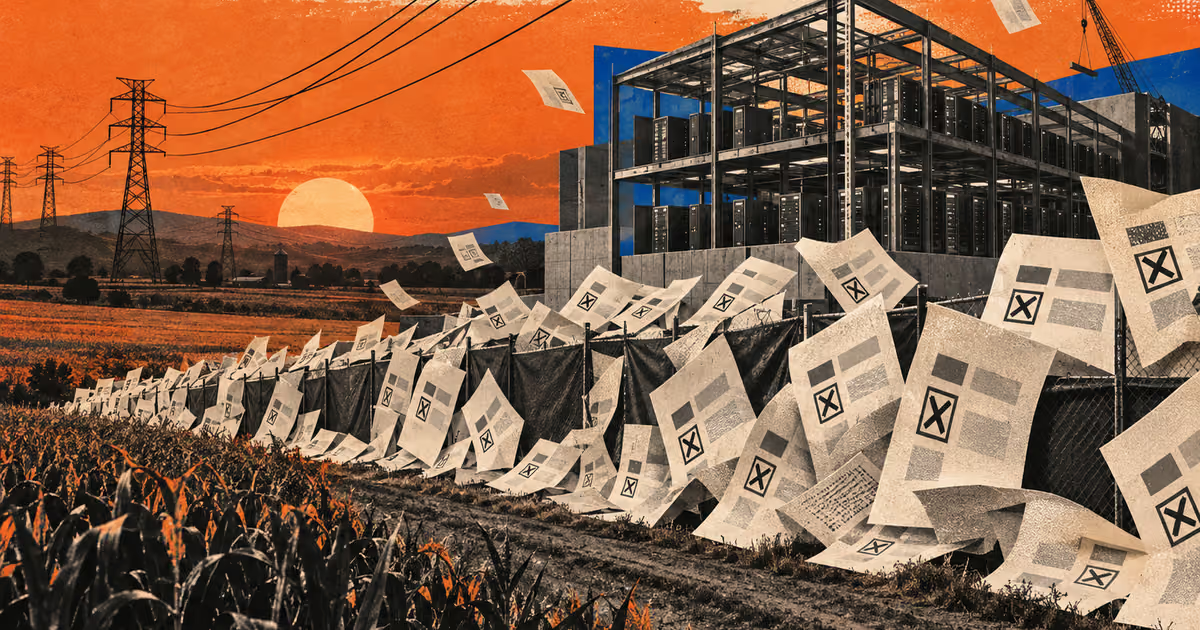
The AI industry poured record money into Tuesday's midterms and still lost where it hurts most: at the town hall. In place after place, voters banned or froze data centers, the backlash helped flip the governorships of Ohio and Texas, and within hours Democrats set to take the House were talking about putting AI chiefs under oath.
The buildout Big Tech has treated as inevitable now carries a political price.
One measure out of 47
There were 41 data center measures in 10 states on the November 3 ballot. Counting everything decided so far this year, there have been 47, and in 46 of them a majority favored tighter limits on data centers. The lone holdout was Harwood, North Dakota, where voters rejected an added review requirement for industrial projects, data centers included, 325 to 105. By one count, at least 38 jurisdictions passed bans or restrictions on Tuesday alone.
The margins were not close. Alhambra, California voted 82% to prohibit data centers in the city. Granville, Ohio voted 82% to bar their construction, and Hubbard, Ohio 77% to ban them within city limits. Monroeville, Ohio rejected an advisory measure to allow them 88% to 12%. In New Jersey, Downe Township turned down a question supporting data centers 87% to 13%.
Ohio alone had 21 measures, more than half the total. In Perry, 87% of voters said hyperscale developers seeking tax breaks must post financial guarantees. In Florida, Edgewater went further and voted overwhelmingly to write a data center ban into its city charter.
None of it came out of nowhere. Fights over noise, power bills and water near AI campuses have been building for months; in Mississippi, Elon Musk's AI company has offered to buy homes near its data center only from residents who stay out of a noise lawsuit.
Ohio and Texas flip
The anger carried up the ticket. In Ohio, Democrat Sherrod Brown ousted Republican Sen. Jon Husted after casting him as "the face of data centers." Democrat Amy Acton beat Vivek Ramaswamy for governor. She backs a "conditional moratorium" that would make data centers cover 100% of their utility costs and "exclusively build with union labor."
That lands in a state where OpenAI announced 8 gigawatts of capacity in August at the PORTS-Pike Technology Campus, which SoftBank and SB Energy are developing, a project that could cost more than $500 billion in total.
In Texas, on track to become the world's largest data center market by 2030, Gina Hinojosa unseated Gov. Greg Abbott after blaming him for the rapid buildout. Abbott had been an AI booster only months earlier. Late in the race the pressure pushed him into promising tougher regulation, and he lost anyway.
In a CNBC voter poll, 56% of voters said data centers were a crucial or major factor in their decision, with Democrats ranking the issue higher than Republicans. Democrats in more than 130 federal and gubernatorial races ran anti-tech or anti-data center ads this cycle, by one analysis.
The money lost
Crypto, AI and online gambling interests spent more than $377 million on the election, according to a CNBC analysis of FEC records. Musk, the cycle's largest individual donor, spent at least $474 million, nearly half of it in Texas, and lost both of the state's marquee races. His reaction on X: "Data centers in space looking pretty appealing right now."
Democrats did not wait long. Once they were projected to win the House, Rep. Greg Casar of Texas, chair of the Congressional Progressive Caucus, said "AI company CEOs should be called to testify under oath." He said Republicans were "bought and paid for by AI billionaires" and called the revolt against data centers one of the top issues of the 2026 election. Rep. Robert Garcia of California, the presumptive next chair of the House Oversight Committee, put it in two words: "Lawyer up."
The timing is awkward for the companies on the receiving end. Alphabet, Amazon and Meta have already turned cash flow negative on their AI infrastructure spending, and the places they need to build just told them no.
Some offers on this page may be paid placements or contain affiliate links.
Subscribe to Techpresso
Free daily newsletter, read in 5 minutes.
Subscribe free