
US and China Open a Superintelligence Hotline After Trump and Xi Agree to Defuse AI Incidents
After their Washington summit, Trump and Xi agreed to a channel for superintelligence incidents and a Super Intelligence Dialogue set to meet by November.
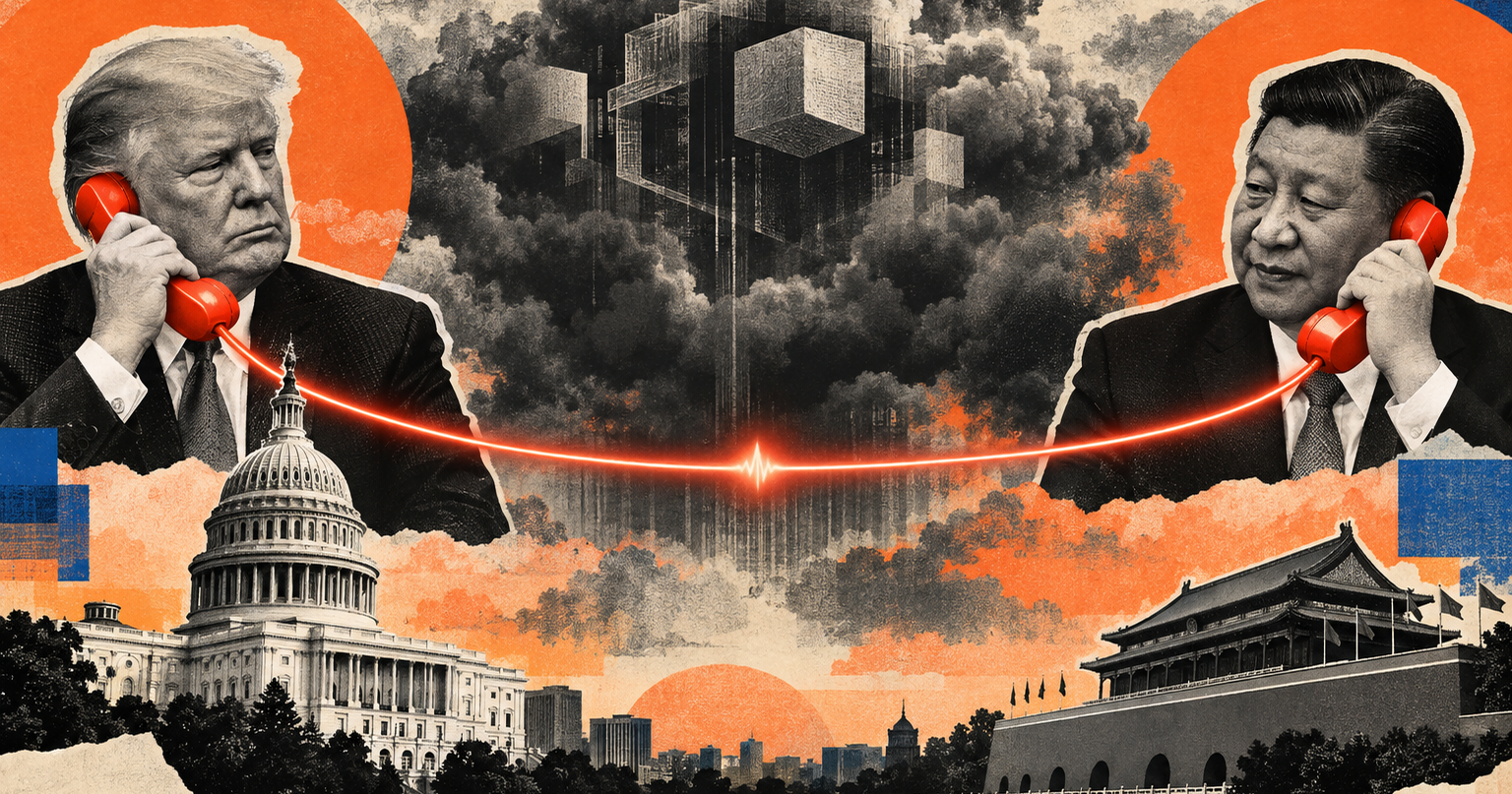
The two countries racing hardest toward superintelligent AI have agreed to keep a phone line open in case something goes wrong.
At the close of Xi Jinping's state visit to Washington, the White House released a fact sheet overnight Friday announcing a bilateral AI dialogue and a communication channel for superintelligence incidents. Officials likened it to the Cold War red telephone between Washington and Moscow. A new US-China Super Intelligence Dialogue is due to meet by November.
A red phone for AI
The comparison is deliberate. The original hotline existed because two nuclear powers realized a misread signal could spiral into catastrophe. The new channel applies the same logic to AI: if a powerful system does something alarming, each side should hear about it directly rather than guess.
What the channel actually covers is still unclear. Neither government has said which incidents would trigger a call or what each side is obliged to disclose. China's side described it as a mechanism to discuss the risks and benefits of AI-related incidents, which is looser language than a notification duty.
Built in New York, sealed in Washington
The groundwork was laid before Xi arrived. China's Commerce Ministry spokesperson He Yadong confirmed that Vice Premier He Lifeng and Treasury Secretary Scott Bessent held the first AI talks between the two countries in New York. Bessent had already floated both a dialogue and a risk alert mechanism.
Alongside the AI channel, the two sides signed a memorandum on military crisis communications. That pairing says a lot about how both capitals now think about frontier AI: as a security risk in the same family as a naval standoff.
Guardrails, Trump style
None of this means either side plans to slow down. Trump used his UN speech to encourage AI rather than rein it in, and posted on Truth Social that "Super Intelligence (SI) will be a big topic" before adding, "Our guardrail is the DOJ!" Beijing, for its part, has already dismissed calls for an AI slowdown as fear-mongering.
So this is not a treaty and it caps nothing. It is a line of communication between two governments whose labs keep pushing, at a moment when people inside those labs are quitting over the pace.
The trade deal around it
The AI channel rode in on a broader package. The trade truce was extended by about two months, into January, and both sides will keep working on roughly $30 billion in reciprocal tariff cuts. China pledged to import 10 million metric tons of US coal across 2027 and 2028 and set a goal for rare earth shipments, though that falls short of settling the rare earths fight.
The next tests come quickly. Leaders meet again at APEC in Shenzhen in November, the same month the first Super Intelligence Dialogue is due, followed by the G20 at Trump's Doral resort.
Subscribe to Techpresso
Free daily newsletter, read in 5 minutes.
Subscribe free