
Turkey Orders Google to Treat News Publishers Fairly in AI Overviews, and Let Them Say No Without Vanishing
Turkey's Competition Authority opened an abuse of dominance investigation into Google's AI Overviews and AI Mode and imposed interim measures requiring fair, non-discriminatory terms for news publishers and an opt-out that does not cost them their place in search.

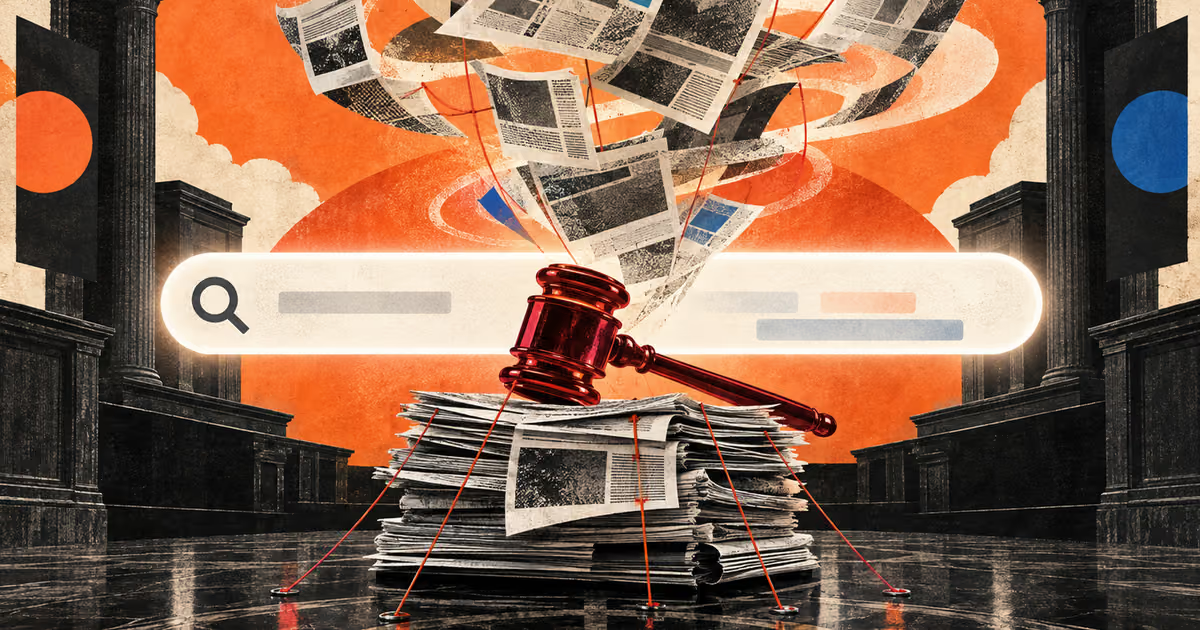
News publishers have spent two years telling anyone who would listen that Google's AI answers swallow their traffic, and that pulling out of those answers means disappearing from search. On Monday, Turkey's competition regulator ordered Google to fix that, without waiting for a final ruling.
Turkey's Competition Authority announced a formal investigation into AI Overviews and AI Mode for possible abuse of a dominant position, and it attached interim measures that take effect while the probe runs.
What Google has to change
The Competition Board decided on 8 October that signs of exclusionary and exploitative behavior toward news publishers had reached the level of "strong suspicion." Google now has to offer news publishers conditions that do not discriminate among them and that reflect the economic value of using their content.
The sharper requirement is about choice. Publishers must be able to decide how their content is used in AI Overviews and AI Mode independently of how they are indexed and shown in Google's other services. Opting out of the AI answers can no longer mean dropping out of regular search.
The authority's own news portal billed it as a "fair share" measure, saying Google will not be able to force news sites into its AI answers. The announcement sets no compliance deadline, names no fine and leaves it to Google to decide how to comply and which commercial approach to take. It covers news publishers only.
The investigation grew out of a preliminary inquiry opened on 27 August. That inquiry asked whether the AI features hurt traffic to publishers and other creators, whether Google's content terms with news outlets are unfair, whether the features shut out publishers and rival AI chatbots, and whether Google treats publishers unequally when it picks or licenses their content. The "strong suspicion" finding is not a ruling that Google broke the law. The investigation still has to establish that.
The teeth behind it
Turkish law allows a fine of 0.05% of annual gross revenue for each day a company ignores an interim measure, though the Google announcement does not cite it. The same authority used that threat in June, giving Meta one month to let third party AI assistants onto WhatsApp.
Google already lets any site worldwide remove itself from AI Overviews, AI Mode and AI features in Discover through a Search Console setting, available since 31 August. That setting says nothing about payment, and sites that use it get no traffic from those features. Google had not publicly responded to the Turkish order as of Monday.
Regulators closing in
Turkey is not alone. The European Commission opened its own abuse of dominance investigation into the same features in December 2025, and five French publisher organizations filed a complaint feeding into it on 29 October. Britain's CMA required Google in June to give publishers tools to stop their content powering AI search, and last week it opened a probe into Meta's new publisher terms, which could let Meta use publishers' content for its own products with no choice for the publishers.
Then on Tuesday, an adviser to the EU's top court weighed in. In a case brought by Hungarian publisher Like Company against Google, Advocate General Maciej Szpunar said that when a chatbot retrieves a press article and reuses it to generate an answer, "the press publisher's right may be infringed in certain circumstances." He pointed in particular to chatbots that get around paywalls or reuse an article's form of expression in a recognisable way.
Szpunar also drew limits. Copyright does not protect "mere facts," he said, and training models on copyrighted material is freely permitted under the EU's text and data mining exception. His opinion is advice, not a ruling, but the court usually follows such opinions.
Two days, two jurisdictions, one direction. The argument over Google's AI answers has moved out of publisher complaints and into official orders.
Some offers on this page may be paid placements or contain affiliate links.
Subscribe to Techpresso
Free daily newsletter, read in 5 minutes.
Subscribe free