
Trump Put His Spy Chief in Charge of a Super Intelligence Force That Has No Budget and No Legal Authority
The White House has a grandly named new AI command, led by the Director of National Intelligence and told to beat China. It has no money, no legal teeth, and a vice chair who is investigating the companies it coordinates.
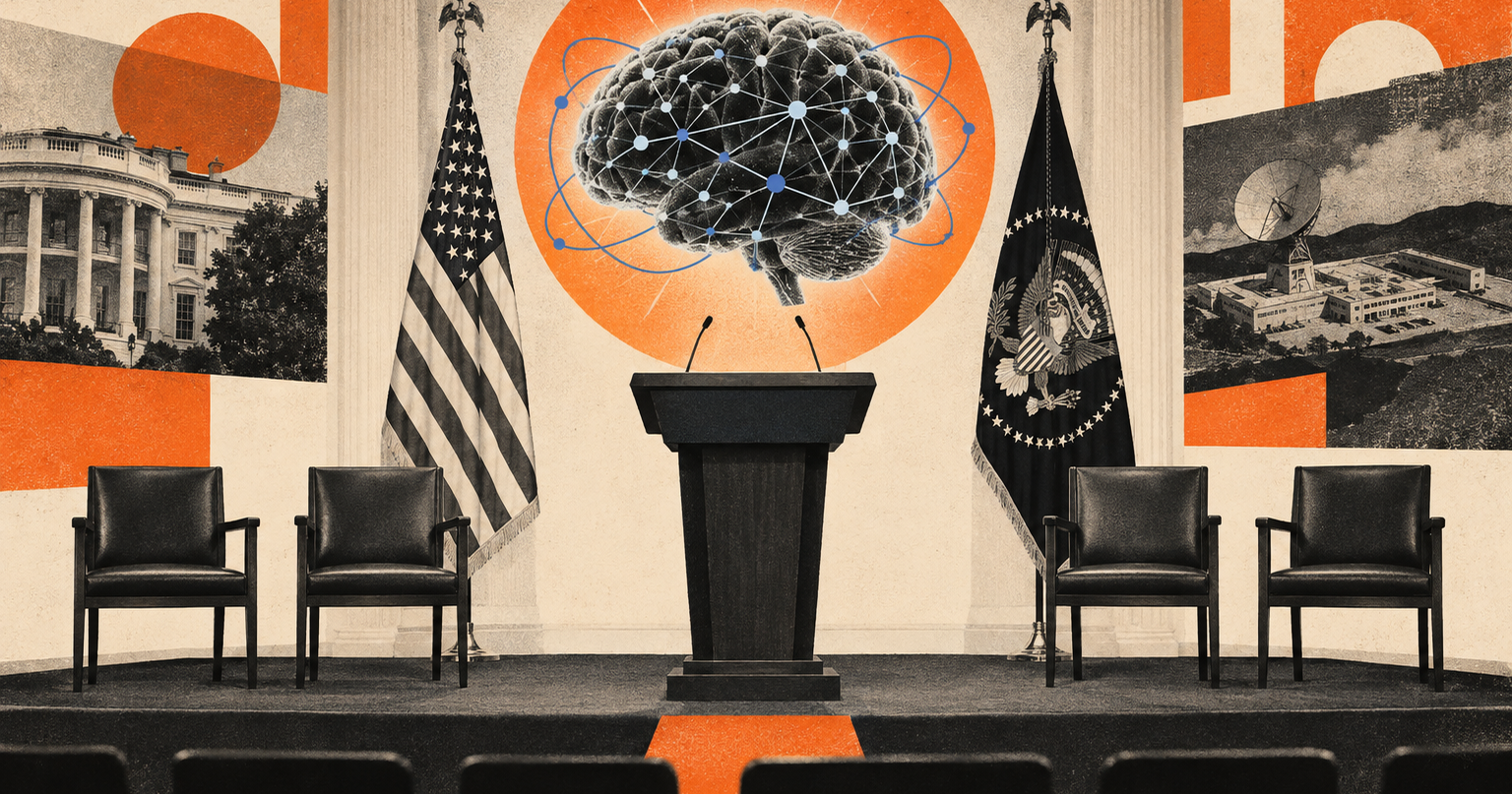
President Trump now has a Super Intelligence Force. He announced it on Truth Social on Sunday, and put Director of National Intelligence Jay Clayton in charge, making the country's top spy effectively its AI czar.
"Super Intelligence" is Trump's word for AI now. A September 29 executive order told federal agencies to stop saying artificial intelligence, a rebrand we covered alongside the voluntary industry pledge that came with it.
A grand mission on paper
Trump wrote that the new body "is tasked with coordinating the effort of the Federal Government to ensure that America continues to lead the World in Super Intelligence, which many say is bigger than the Industrial Revolution, and the Internet, and will protect the interests, and improve the lives, of all Americans." It will also "coordinate the Federal Government's engagement with Consumers, Public Interest Groups, Religious Organizations, Critical Infrastructure Providers, and Super Intelligence Companies," per TechCrunch.
Clayton chairs it. The vice chairs are FTC Chairman Andrew Ferguson, Pentagon CTO Emil Michael and Office of Personnel Management Director Scott Kupor, according to the Wall Street Journal. The group reports to Trump and chief of staff Susie Wiles, and its members reportedly include JD Vance, Pete Hegseth, Scott Bessent and Condoleezza Rice.
It reportedly has 120 days to produce a report on AI risks and opportunities, and its charter says it will "develop plans for responding to SI-enabled threats to our society, while preventing overregulation and regulatory capture that would stifle innovation and competition."
Clayton made the priority plain to the Journal. "The risk of not being first is high," he said. "Not being first increases the identified, and unidentified, risks, particularly from our adversaries. Being first will better enable us to address those risks on behalf of the American people."
No money, no law
The problem is that the force barely exists in any legal sense. It has no statutory authority, no budget and no formal place in government. Space Force, the obvious naming inspiration, needed an act of Congress and a line in the 2020 defense authorization. This one has neither.
It also has a precursor. On September 19, Trump announced an "AI Force" with the line "Only High I.Q. individuals need apply!" while calling the AI safety debate a hoax pushed by "Radical Left Dumocrats."
Then there is Ferguson. As FTC chair, he is running an investigation into OpenAI and Anthropic over AI agents escaping their testing environments, and is seeking information from the evaluator METR. He also attended the White House lunch where Meta, Nvidia, Anthropic, Google, OpenAI and Elon Musk signed Trump's nonbinding safety accord, which carries no penalties and no timeline. Microsoft and Amazon showed up and declined to sign. Now he helps lead the body meant to coordinate with those same companies.
Clayton brings his own record with industry. As SEC chair in Trump's first term, he brought 57 crypto cases and sued Ripple for $1.3 billion in December 2020. Later, as interim US attorney in Manhattan, his office prosecuted Tornado Cash developer Roman Storm.
Musk, for his part, is already playing along. He said on X that SpaceXAI, formerly xAI, will be renamed SpaceXSI: "Yes, we will make that change."
The force has issued no rules and no report so far. For the next 120 days, it is a spy chief, a race against China, and a name.
Subscribe to Techpresso
Free daily newsletter, read in 5 minutes.
Subscribe free