
Trump Branded Anyone Saying 'Artificial Intelligence' the Enemy, and Silicon Valley's CEOs Fell in Line
After Trump called anyone who says 'Artificial Intelligence' the enemy, Musk, Benioff, Huang and Nadella adopted his 'Super Intelligence' rebrand, even though his executive order only covers federal agencies.
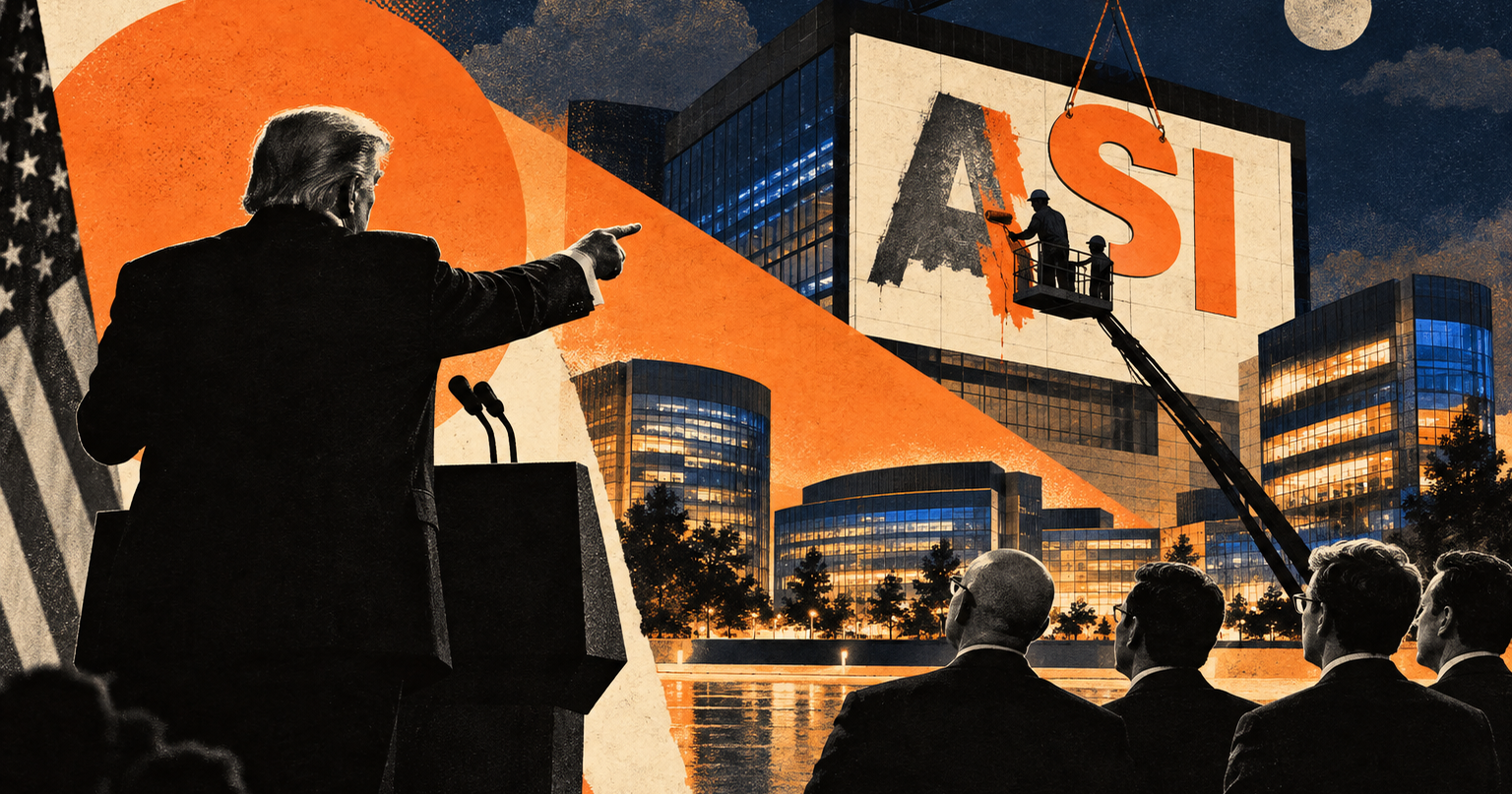
The president of the United States declared a word to be a sign of disloyalty, and within days the most powerful people in tech started scrubbing it from their products and their posts.
"The White House considers anyone that uses the term, 'Artificial Intelligence,' as opposed to the highly accepted new and more accurate term, 'Super Intelligence,' THE ENEMY!" Trump wrote on Truth Social last week. Hours later, Marc Benioff had a new name ready. "The era of Super Intelligence is here. AIForce is officially SIForce," the Salesforce CEO posted on X. The rename covers Salesforce's agent platform, not the company itself.
One CEO after another
Benioff was not alone. Elon Musk promised to rename SpaceXAI to SpaceXSI, and the SpaceXAI account on X has already changed. Jensen Huang, who attended the summit where the executive order was announced and has said the danger posed by AI is overblown, folded the new vocabulary into Nvidia's plans: when the company said it would commit $1 billion to scientific advancement, the pledge included "super intelligence research."
Then came Satya Nadella. The Microsoft CEO, who sat at the same summit alongside Mark Zuckerberg, Sundar Pichai, Jeff Bezos, Dario Amodei and Musk, wrote a post calling for an "emergency brake" for AI and repeatedly called the technology "super intelligence". Nadella had used "superintelligence" before, but his Saturday post on model containment and governance was the first time he wrote it as two capitalized words, the White House way.
OpenAI, Scale AI, Character AI and Resolve AI did not respond to Business Insider's requests for comment.
An order that doesn't apply to them
The striking part is that none of these companies has to do any of it. The September 29 executive order tells federal agencies to swap "Super Intelligence" and "SI" for "Artificial Intelligence" and "AI" in official communications, websites, reports and policy documents, to the extent permitted by law. Private companies are not covered.
They are complying anyway. During Trump's second term, Silicon Valley has repeatedly tried to ingratiate itself with the administration after a far more contentious first term, and a name change is a cheap way to show you are on the right side of a loyalty test.
Inside government, the rebrand is already spreading. The Center for AI Standards and Innovation became the Center for Advancing Innovation and Standards for Super Intelligence, or CAISSI. Justice Department press releases now describe a man who flooded streaming platforms with AI songs as committing "Super Intelligence-Assisted Music Streaming Fraud."
Bezos said he likes the term because "artificial is not a very flattering thing." Sam Altman praised it too, but said OpenAI won't change its name. Trump told the UN that "the use of the word artificial makes intelligence fake," and says he will retire "fake news media" in favor of "artificial media."
A word that used to mean something
The cost is that "superintelligence" had a specific meaning. Popularized by Nick Bostrom's 2014 book, it describes AI that could surpass human thought, systems far more capable than people across a broad range of tasks. It was never a name for the whole field. Stamping it on a sales agent platform or a streaming fraud case does not make either one superhuman.
The rebrand also runs straight into the law. Trump cannot stop Congress from saying "artificial intelligence," and the phrase appears in existing statutes like the Take It Down Act, which agencies have to cite by name in court. And in early September, Bernie Sanders cosponsored a Ban Artificial Superintelligence Act, a bill aimed at the real thing, just as the White House starts stamping that same word on everything.
For now, the CEOs have decided the vocabulary fight is not worth having. The president asked for a new word, and the industry that builds the technology handed it to him.
Some offers on this page may be paid placements or contain affiliate links.
Subscribe to Techpresso
Free daily newsletter, read in 5 minutes.
Subscribe free