
Trump Forces Federal Agencies to Drop the AI Label for Super Intelligence After CEO Lunch
Trump ordered federal agencies to say Super Intelligence instead of AI after a White House lunch where tech CEOs agreed the industry should police itself.
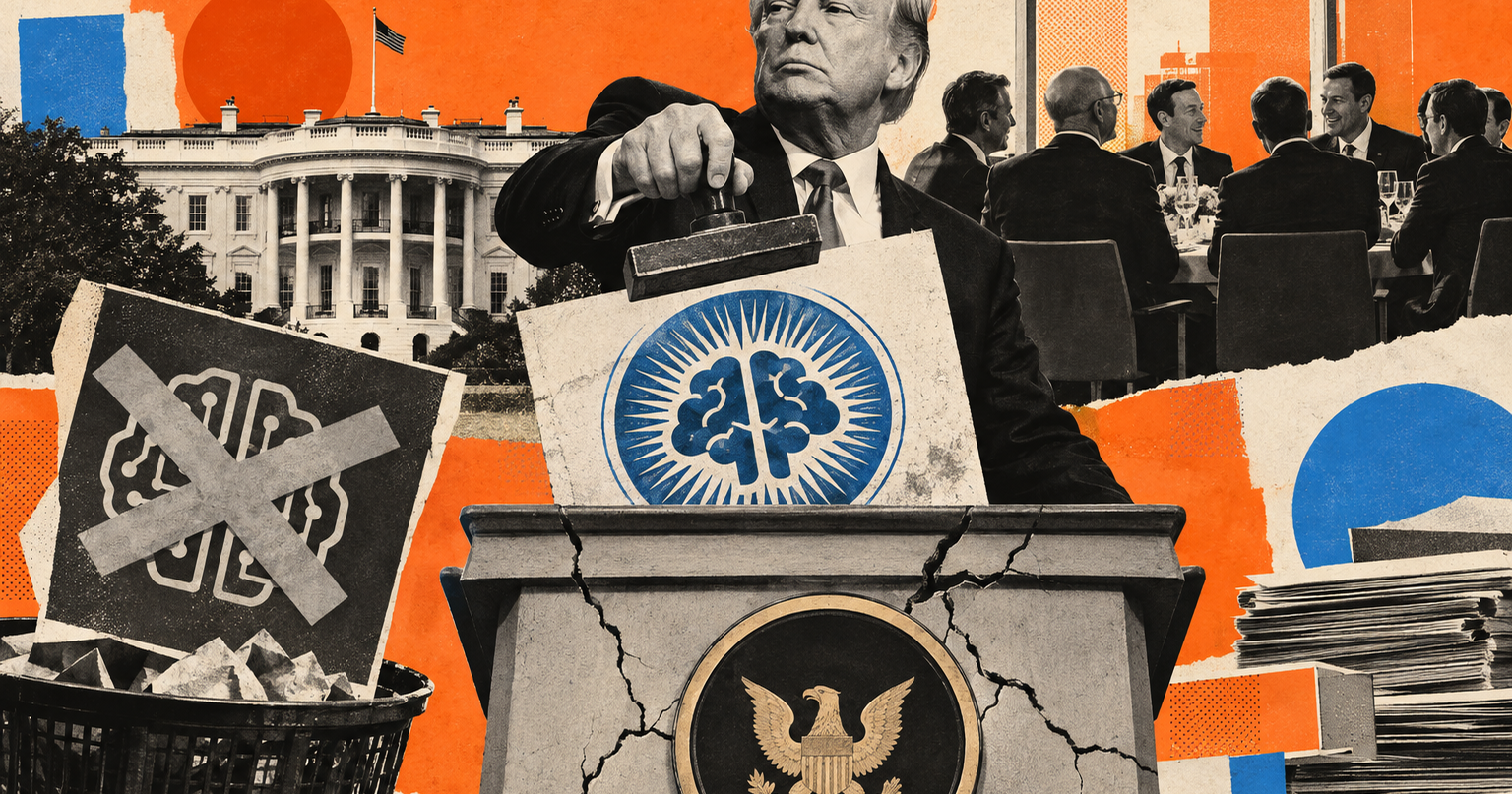
The federal government no longer works on artificial intelligence. It works on Super Intelligence. President Trump has signed an executive order titled "Inaugurating The Era Of Super Intelligence" that tells every executive branch department and agency to use "Super Intelligence," or SI, in place of "artificial intelligence" and "AI" in official correspondence, public communications, policy, and other documents.
The rename landed right after a White House lunch with more than two dozen of the most powerful people in tech. What came out of that room was a new word, a voluntary pledge, and no new binding rules.
A new name, the same old rules
The order is forward-looking. Agencies do not have to go back and rewrite existing regulations, but from here on, official websites, press materials, and policy documents drop the AI label. Trump has been road-testing the phrase for a while. He pitched "Super Intelligence" at the UN General Assembly the week before and again while launching America.gov.
His reasoning was not complicated. "The word super is the best word of all, and it's the simplest," he said while pitching the rebrand.
The branding matters less than what sits underneath it. Checks on the most powerful models remain voluntary under a June order, and nothing signed this week changes that.
Who was at the table
The guest list read like a market cap leaderboard. An Axios RSVP list included Jeff Bezos, Mark Zuckerberg, Satya Nadella, Sundar Pichai, and AMD's Lisa Su, with House Speaker Mike Johnson co-hosting. Nvidia's Jensen Huang sat at Trump's right and Elon Musk at his left, according to The Next Web.
OpenAI sent president Greg Brockman. Sam Altman stayed behind at the company's DevDay event.
It is not the first time this crowd has orbited the White House on AI. Zuckerberg, Musk, and Huang have already been in the mix as the administration weighed how to police AI.
"Police themselves"
After the lunch, Trump told reporters the executives agreed that companies should regulate themselves, working alongside the Justice Department and the FBI rather than under a new federal rulebook. CNBC reported that the tech leaders appeared to sign a separate two-page document of voluntary safeguards, which Trump then posted on Truth Social.
Voluntary is the operative word. A pledge shared on social media carries no enforcement mechanism, no penalties, and no regulator with the power to check whether anyone follows it.
Not everyone in the room sounded relaxed. Anthropic's Dario Amodei raised AI safety concerns during the discussion. Palantir's Alex Karp said the industry needs to own up to the risks it already knows about. Those are notable comments from two CEOs who stand to profit enormously from the very systems they are warning about.
The politics behind the pitch
The timing is awkward for the White House. Polling ahead of the midterms shows real public anxiety about AI, from jobs to misinformation to safety. Trump, meanwhile, has dismissed some of the existential warnings as a "hoax" and has framed the whole project as a race to beat China.
That framing explains a lot. If the priority is speed, then self-regulation, friendly CEOs, and a grander name all fit together. The administration has even floated keeping lines open with Beijing, as in talk of a US-China superintelligence hotline, while still treating the technology as a contest to win.
So agencies will start writing "SI" in their press releases this week. The companies building the most capable models will keep deciding for themselves how careful to be. The government changed what it calls the technology, and left the rules around it as voluntary as they were before the lunch.
Subscribe to Techpresso
Free daily newsletter, read in 5 minutes.
Subscribe free