
Tesla Will Wind Down Cybertruck Production at Its Texas Factory to Make Room for Cybercabs
Elon Musk said Tesla will wind down Cybertruck production at its Texas gigafactory around the middle of 2027 to make room for more Cybercab robotaxi production.

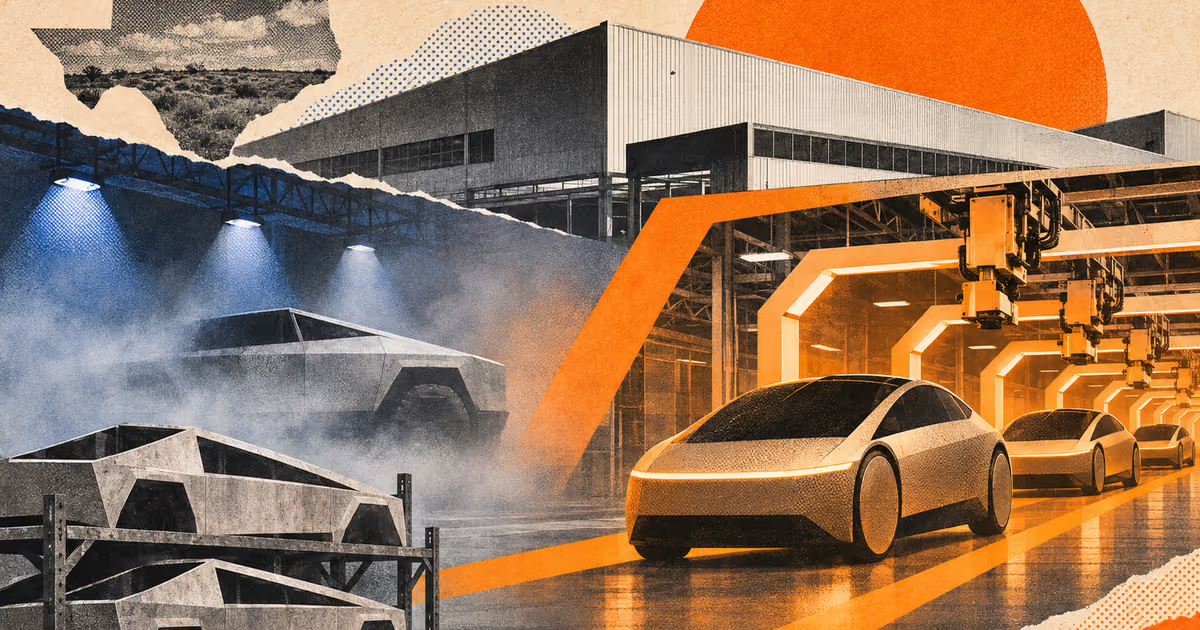
The Cybertruck is losing its home. Elon Musk said on Friday that Tesla will wind down production of its stainless steel pickup at Gigafactory Texas, the only plant that builds it, to free up space for the two-seat Cybercab robotaxi.
The timing is not immediate. Musk said the wind-down would come around the middle of next year to make room for increased Cybercab production. The Austin factory currently builds the Cybertruck alongside the Model Y and the Cybercab itself.
Musk did not say whether the truck would move to another factory. That would not be cheap: the Cybertruck relies on specialized tooling, and Texas is the only place it has ever been built.
From 250,000 dreams to 20,000 sales
The announcement came, as Tesla news often does, in a post on X. When one user replied that it was the end of an era and called the Cybertruck the best vehicle Tesla has ever made, Musk answered: "True, but the Cybertruck fleet will be around for a long time."
The sales numbers tell the less sentimental story. Deliveries began in late 2023 after long delays. Before launch, Musk had predicted annual sales of 250,000. Instead, Tesla sold 20,237 Cybertrucks in the US last year, according to Kelley Blue Book, down 48% from 38,965 in 2024.
The truck never found much room to grow. Its angular stainless design split buyers from day one, it went through a series of recalls, and it was sold in only a handful of markets outside the United States.
Betting the floor on autonomy
What replaces it says more about Tesla than what leaves. Musk has pinned the company's growth on robotics, AI, and an autonomous driving fleet rather than a steady stream of new consumer models. Giving the Cybertruck's floor space to a car with no steering wheel is that strategy made physical.
The Cybercab is still early. Paid rides began in a small Austin fleet in September, and federal safety regulators are still asking questions about how the vehicle was self-certified.
Tesla is not alone in staking factory capacity on machines that drive and work on their own, and that bet is getting harder to make cleanly. Just this week, Beijing blocked SoftBank's $5.4 billion deal for ABB's robotics business in China over fears the data could train OpenAI's models, a reminder that autonomy hardware now sits squarely inside geopolitics.
For current owners, nothing changes yet. The Cybertruck stays in production until the middle of 2027, and Musk's own reply suggests the trucks already on the road will be around for years. The pickup that was supposed to sell a quarter million a year is simply no longer the thing Tesla wants its Texas factory to make.
Some offers on this page may be paid placements or contain affiliate links.
Subscribe to Techpresso
Free daily newsletter, read in 5 minutes.
Subscribe free