
Sony and Warner Chappell sue Anthropic over Claude music training
Sony Music Publishing and Warner Chappell sued Anthropic, alleging it built Claude on pirated songbooks and lyrics. These are allegations, not findings.

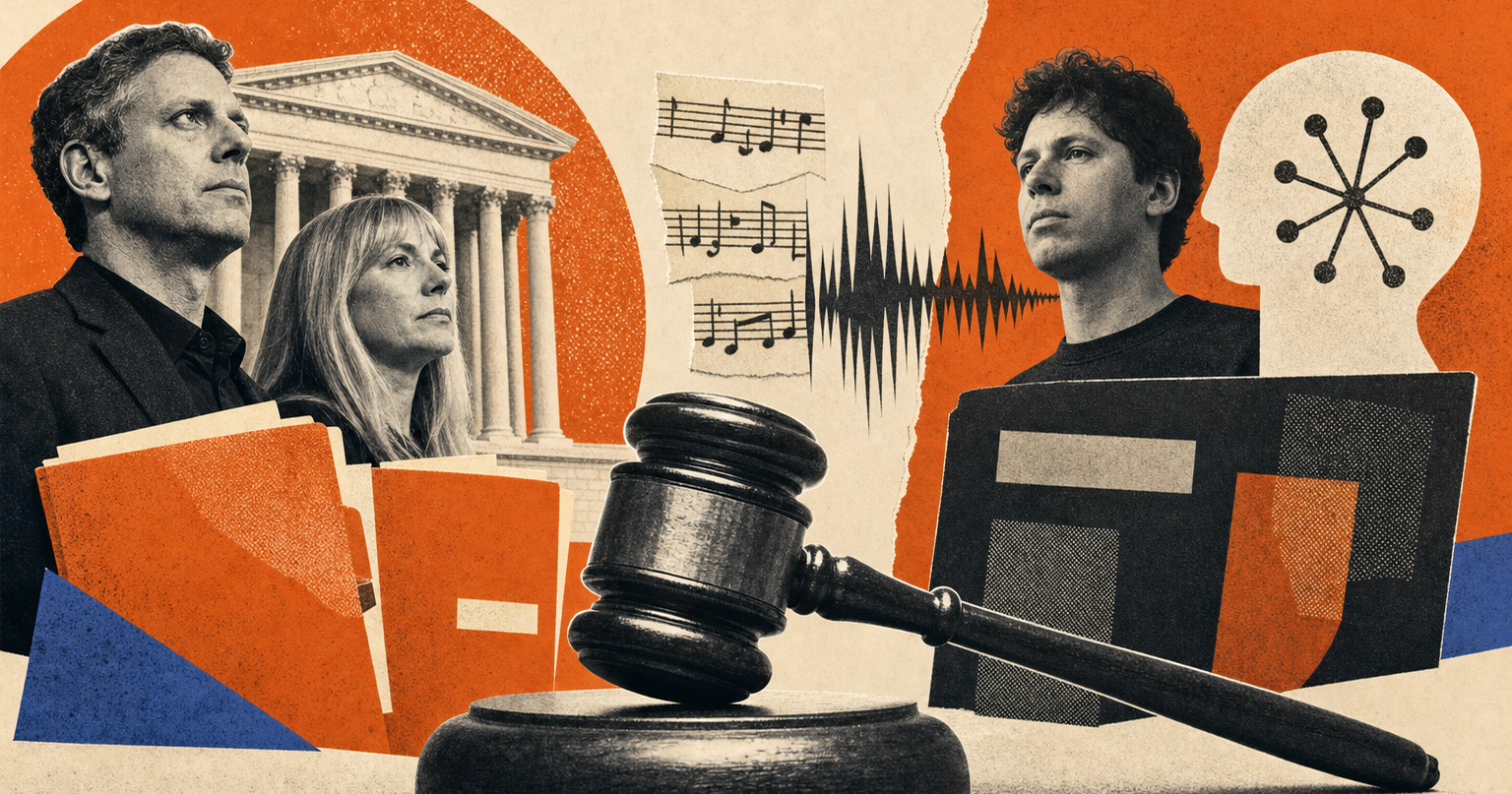
The publishing arms of the last two major music groups took Anthropic to federal court on Friday, and everything in the filing is a claim a judge has yet to test. Sony Music Publishing and Warner Chappell Music, joined by a long list of other publishers, brought a Complaint and Demand for Jury Trial in the U.S. District Court for the Northern District of California, San Jose Division, case 5:26-cv-09217, filed 28 August. Read it as a set of allegations, not findings: the publishers say Anthropic built Claude on pirated songbooks and lyrics, and Anthropic, which has not yet answered, calls the case a rerun of suits already in front of the same court.
Who is named, and on what
The complaint names three defendants: Anthropic PBC, chief executive Dario Amodei, and co-founder Benjamin Mann, whom the filing identifies as a Member of the Technical Staff. It sets out four counts. Count I alleges direct copyright infringement by torrenting against all three defendants. Count II alleges contributory infringement by torrenting against Amodei and Mann only. Count III alleges direct infringement against Anthropic alone. Count IV alleges removal or alteration of copyright management information (CMI) against Anthropic under 17 U.S.C. 1202. Two of those counts reach the two executives personally, not just the company.
The torrenting theory
The core allegation leans on the record from the authors' case, Bartz v. Anthropic. The publishers say Mann, acting for Anthropic and at Amodei's direction, used BitTorrent in June 2021 to download at least five million books from Library Genesis (LibGen), and that employees torrented at least two million more from the Pirate Library Mirror (PiLiMi) in July 2022, "over seven million" copyrighted books in all. Among that haul, the complaint alleges, were sheet-music songbooks including The Beatles Complete Scores, Best of Taylor Swift, and Bon Jovi These Days. Exhibit A lists the compositions the publishers put at issue.
Beyond torrenting: scraping, scanning, and Claude's outputs
Count III widens the case past piracy to how Claude was trained and what it produces. The publishers allege Anthropic scraped licensed lyric sites such as MusixMatch and LyricFind, ran a "destructive scanning" operation modeled on the Google Books project, and pulled from third-party datasets Common Crawl, The Pile, and Books3. They further allege Claude reproduced verbatim or near-verbatim lyrics to works including Uptown Funk, Redbone, and Stay, and generated market-substitute "new" lyrics. None of this has been proven; it is what the complaint asserts.
What the publishers are asking for
The prayer for relief seeks statutory damages up to $150,000 per work if the infringement is found willful (17 U.S.C. 504(c)), up to $25,000 per CMI violation (17 U.S.C. 1203(c)(3)(B)), a permanent injunction, an order that Anthropic account for Claude's training data and methods, destruction of infringing copies (17 U.S.C. 503(b)), and attorneys' fees. Those are ceilings the statute permits, not sums a court has awarded, and the complaint attaches no single dollar figure to the case. The part a wire summary tends to skip is Count IV: a separate DMCA claim over stripped copyright-management information, carrying its own $25,000-per-violation exposure, on top of the demand that Anthropic hand over an accounting of how Claude was trained.
The dispute
The publishers frame the conduct in maximal terms, calling it "one of the largest and most blatant ongoing thefts of intellectual property in history" and arguing the $1.5 billion Anthropic paid to settle Bartz was "just the cost of doing business" for a company they describe as carrying a "$2-trillion-dollar valuation." Those are the plaintiffs' characterizations. Anthropic pushed back: it told TechCrunch on 29 August that "we disagree with the publishers' claims and we intend to defend ourselves robustly in court," and told Reuters on 31 August that this is "the third lawsuit from the same lawyers, recycling allegations from cases already before the courts," repeating that training on copyrighted material is fair use and pointing to the judge in the authors' case.
That is the real fault line. In Bartz, the court held that training on lawfully acquired books was fair use while torrenting pirate libraries was piracy. This complaint tries to stand the songbook torrenting on its own and then push past it into training, outputs, scraping, and CMI, a wider reach than the piracy finding alone. The suit lands amid a broader legal front around the company, from the court ruling that unwound Anthropic's Pentagon blacklist to the EU's move to treat ChatGPT as a regulated search engine.
The takeaway
This filing puts the last two major music publishers' catalogs onto the same torrenting record the Bartz court already called piracy, while Anthropic bets on fair use and frames the suit as a third recycle from the same lawyers. Watch the San Jose docket for the tell: whether the court relates this case to the pending Concord suits (5:24-cv-03811 and 5:26-cv-00880, brought by the same counsel) or lets it run as a fresh matter with its own schedule.
Some offers on this page may be paid placements or contain affiliate links.
Subscribe to Techpresso
Free daily newsletter, read in 5 minutes.
Subscribe free