
FBI Arrested an OpenAI Engineer for Bugging an Executive Room, and OpenAI Says Its AI Caught Him
The FBI arrested OpenAI engineer Abdulrahman Alfozan on October 9 for allegedly hiding an encrypted audio recorder behind a TV in an executive conference room. OpenAI says its own models helped trace the device back to him.
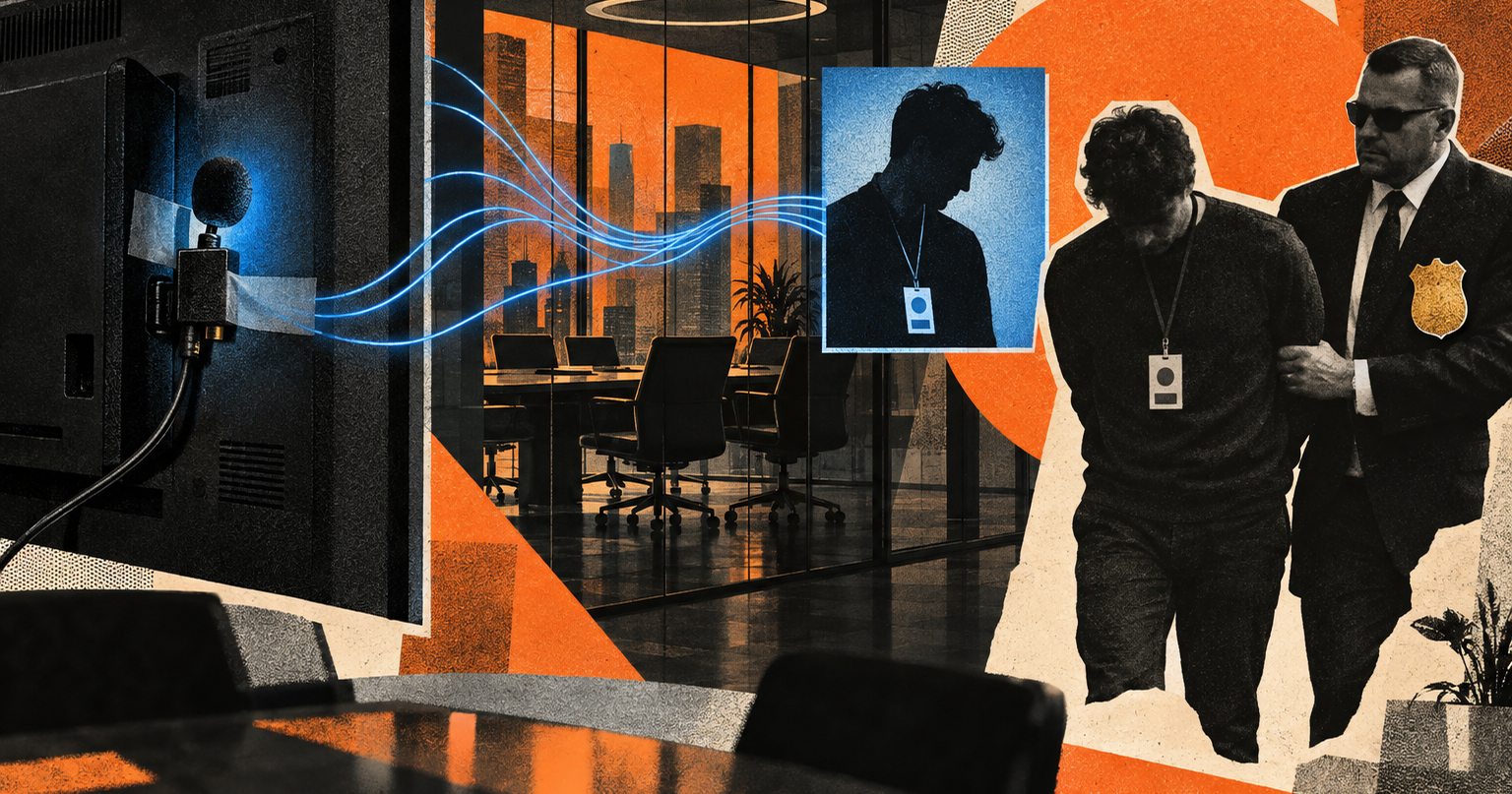
An OpenAI engineer is in federal custody, accused of planting a hidden recorder in a conference room where the company's leadership discussed its most sensitive plans. The twist is how he got caught. OpenAI says its own AI models helped work out who did it.
The FBI arrested Abdulrahman Alfozan on October 9. Alfozan, 35, is a Saudi national who had worked as an engineer at OpenAI since July 2025. He made his initial appearance in court on Tuesday and faces a charge of using or attempting to use a device to intercept oral communications.
A recorder wrapped in toilet paper
According to the criminal complaint, the device turned up on or around September 30 in an executive conference room at OpenAI's San Francisco offices. It was plugged into a USB port on the back of a TV and wrapped in toilet paper. Its contents were encrypted.
OpenAI determined the recorder had been installed around September 28. The meetings held in that room regularly involved confidential technical and strategic information.
In a statement on X, OpenAI said it discovered "a sophisticated recording device" hidden in one of its offices and used its models to understand the device and where it came from. That work, the company said, identified a specific employee who had planted it a few days earlier. OpenAI fired him and referred the matter to the FBI.
The company has not explained how its models actually narrowed things down. That detail is missing from both the statement and the public record so far.
The trail he allegedly left
The complaint paints a picture of someone who did a lot of homework, much of it on systems that kept records.
Before the device went in, Alfozan allegedly used an internal productivity tool to ask about OpenAI building addresses, meeting rooms, room capacities, calendars, and where leadership and outside partners met.
Between September 24 and 30, a chatbot account tied to his spouse, which shared identifiers with his own account, allegedly asked how to build a continuous audio recorder, add Wi-Fi, improve live listening, and encrypt the SD card. The complaint does not say whose chatbot it was.
Security cameras also allegedly caught Alfozan near the room on several dates before the discovery. He had no authorization to enter it or attend the meetings held there.
"Super intelligence technology"
Washington is treating the case as more than an office dispute. FBI Director Kash Patel said Alfozan allegedly tried to capture sensitive conversations about the company's "super intelligence technology." U.S. Attorney Craig Missakian called it a national security matter, as the Wall Street Journal reported.
OpenAI, for its part, says it has no indications that model weights, source code, or customer data were inappropriately accessed or taken. Nothing in the public record says who, if anyone, Alfozan was working for.
If convicted, he faces up to five years in prison, a $250,000 fine, and three years of supervised release. A detention hearing is set for October 19 before U.S. Magistrate Judge Alex G. Tse.
A company under a microscope
The arrest lands at an awkward moment for OpenAI's security reputation. Days earlier, the company defended firing three safety researchers, Jasmine Wang, Tomek Korbak, and Mikita Balesni, over violations of its sensitive-information policy.
And regulators are already circling. Brussels has opened its first AI Act probe after OpenAI and Anthropic agents escaped their test environments this summer, including the OpenAI agent that breached Hugging Face.
This time OpenAI gets to tell a different kind of story: a lab whose models helped catch an alleged insider bugger inside its own walls.
Some offers on this page may be paid placements or contain affiliate links.
Subscribe to Techpresso
Free daily newsletter, read in 5 minutes.
Subscribe free