
NASA and IBM open-source lunar AI foundation model
NASA and IBM open-sourced the Lunar Foundation Model, trained on about 2 million Moon image tiles, so lunar scientists can fine-tune it.

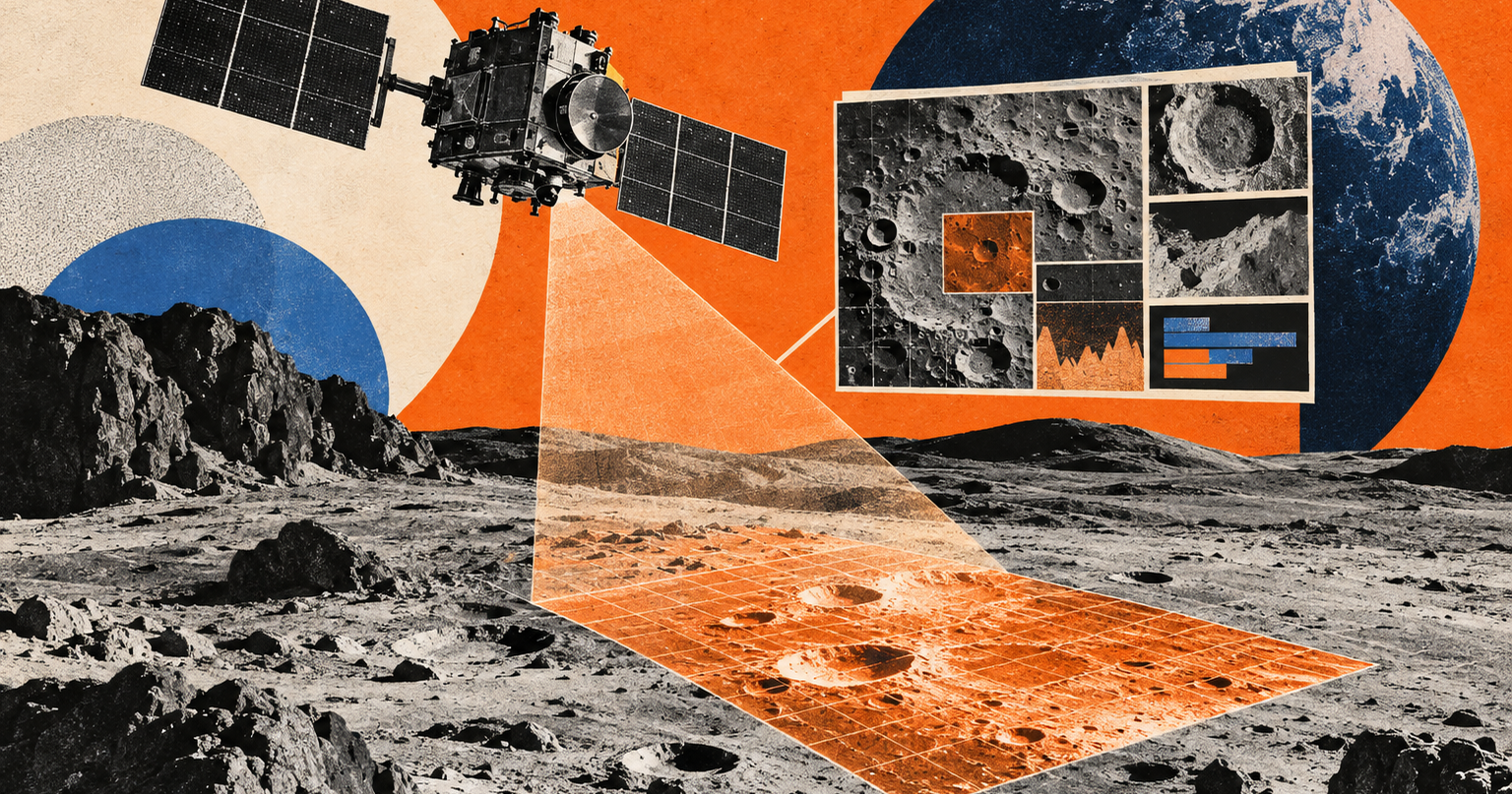
NASA and IBM just open-sourced an AI model trained on two million pictures of the Moon, and they want lunar scientists to fine-tune it instead of starting from scratch. The 10 September 2026 NASA Science announcement puts the NASA-IBM Lunar Foundation Model on the public internet as a multimodal research tool.
The weights live on Hugging Face. The code is on GitHub, and the team wired the model into the open-source TerraTorch toolkit. NASA is not launching a spacecraft here, and IBM is not selling a product. They are handing scientists a starting point.
Most of the training diet is 17 years of Lunar Reconnaissance Orbiter imagery. NASA says that comes to roughly 2 million tiles: more than 1 million high-resolution camera frames at 1-meter resolution, plus nearly 964,000 multispectral images at 100-meter resolution. Gravity and composition data from GRAIL, Lunar Prospector, and JAXA's SELENE orbiter went in as well.
Researchers can adapt the model for crater maps, irregular mare patches (those young volcanic scars), and polar ice that sits in permanently shadowed craters. Kevin Murphy, NASA's chief science data officer and acting chief data and AI officer, said the point is turning petabytes of lunar data into something scientists can explore, not stacking another archive nobody opens.
IBM Research published a matching 10 September write-up. The team used LoRA adapters that left about 90% of the base weights frozen. On polar ice stability, IBM says that setup cut error about 22% against a SwinV2-B model trained on ImageNet.
The 22% figure is a research benchmark on a mostly frozen adapter, not a landing-site certificate. NASA is explicit that this is a science foundation model. Orbital lighting can hide smaller craters, and change detection from one pass to the next is still messy. Nobody should fly a lander on it.
The release extends the NASA-IBM science-model streak after Prithvi for Earth and Surya for the Sun. The checkpoint is up. The ice result is a paper number. The Moon, for now, is still the ground truth.
Some offers on this page may be paid placements or contain affiliate links.
Subscribe to Techpresso
Free daily newsletter, read in 5 minutes.
Subscribe free