
Google Cleared 250,000 Trees in Finland for an AI Data Center Before Doing the Required Environmental Checks
Finland's regulator halted Google's work at two AI data center sites after the company cleared about 330 hectares of forest near Muhos without the required environmental impact assessments.

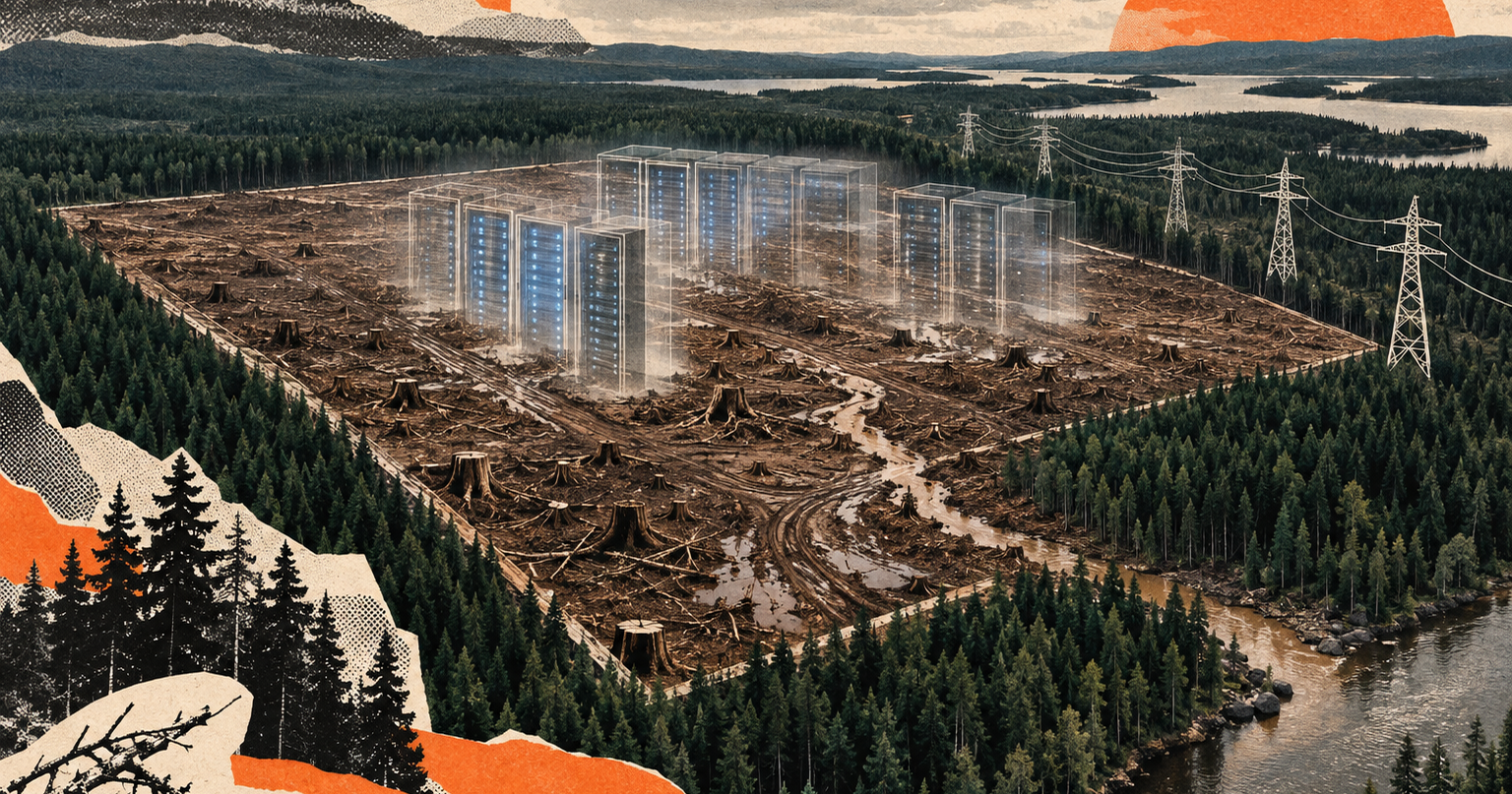
A few months ago, an estimated 250,000 trees stood on 330 hectares (815 acres) of forest near Muhos in rural northern Finland. Now they are gone. Google stripped the whole area for its AI build out, taking even the topsoil, and Finland's regulator says it did so before completing the environmental impact assessments the law requires.
Work has stopped at two sites. More than 93,000 people have signed a petition. And a country that rolled out the welcome mat for Google is starting to ask whether it wants these data centers at all.
A clearcut you can see from the sky
The clearing near Muhos is 3 kilometres long and 2 kilometres wide, and it sits 400 metres from the Oulujoki River. What remains, the Guardian found on the ground, is mud, machinery tracks, puddles, mounds of earth, roots and branches. Residents say brown water from the site runs into a stream that feeds the river.
"It doesn't end. It goes on and on," said Mari Annala, an ecologist with the Finnish Association for Nature Conservation (SLL), watching drone footage of the site. She estimates another 150,000 trees were felled at Otanmäki, about 100 kilometres to the south east near Kajaani. Because the felling was illegal, the Guardian reports, wood from both sites cannot be sold to processing plants.
Earlier this month the Finnish Licensing and Supervision Authority, known as LVV, ordered Google to temporarily stop work at Muhos and Otanmäki because it had not completed the necessary assessments before clearcutting.
Google's response
Google says it received the LVV letters on October 6, stopped preparatory works at Muhos and Kajaani, and will "fully comply with LVV's requests." A spokesperson said the company has operated in Finland for 15 years and has "always worked to meet or exceed zoning, environmental, health and safety requirements."
Last week Antti Järvinen, Google's country manager for Finland, apologised for the clearings, while saying the company had acted "on the best understanding we had of the legislation at the time." Google plans to plant trees across 130 hectares at Muhos and says it is protecting water quality. Conservationists say 130 hectares is far too little to matter.
Hanna Halmeenpää, who chairs the SLL board, said she could not believe it at first. "I have never heard that any company has done anything like this in Finland," she said. The Finnish system runs on trust, and she believes Google exploited it. "They bought the vast land area and they just started to cut it, just like that. It's pure arrogance and it's amazing."
From top priority to cold shower
The two sites are part of a 13 billion euro Google AI infrastructure project, the biggest of its kind ever in Finland. Prime Minister Petteri Orpo, whose government has made deep spending cuts, called attracting such investment a "top priority" when the plans were announced last month and said the deal would "deliver lasting benefits for both parties." Since the scandal broke, he has called Muhos a "cold shower."
The project has critics abroad too. Donald Trump wants the centers built in the US and has publicly called for Google to reconsider.
Finland has 145 new data centers at various stages of planning, drawn by its cool climate, abundant land and political stability. That makes it a frontline of the AI build out, and not everyone thinks the country gets much in return. "Really, for Finland, there are no benefits," said Jussi Kangasharju, head of computer science at the University of Helsinki. "They are international companies serving international customers. Very little corporate taxes go to Finland."
The petition demands more regulation of data centers and a fee to compensate local communities, an idea that echoes the community backlash against data centers in the US, where President Trump has told data center builders to pay the towns that host them a "dividend."
The people living next door
In Muhos, resident Antti Jakonen put it bluntly. "It has been done in the wrong way. American style. No sense. No sense at all." He wants Google to help restore the local salmon population.
In Otanmäki, Anni Ranta, 53, said wolves came into the village after the trees fell, because the wild animals had fled the forest. She fears a data center could make the village a target for Russia and is thinking of moving. "I don't want them here. I don't want them in Finland at all."
Not everyone agrees. Some locals welcome the jobs and the land taxes, and some want a central body, rather than individual municipalities, to coordinate projects like these. Veli-Matti Uski, director general at the environment ministry, said the government is monitoring the sector and "is prepared to propose legislative amendments as necessary."
Data centers now look set to be a key issue in Finland's election in April.
Some offers on this page may be paid placements or contain affiliate links.
Subscribe to Techpresso
Free daily newsletter, read in 5 minutes.
Subscribe free