
GM Will Pay $220 Million After States Said It Secretly Sold Drivers' Braking and Speeding Data to Insurers
General Motors agreed to pay $220 million to settle claims from 36 state attorneys general that it sold drivers' behavior and location data to brokers who passed it to insurers.

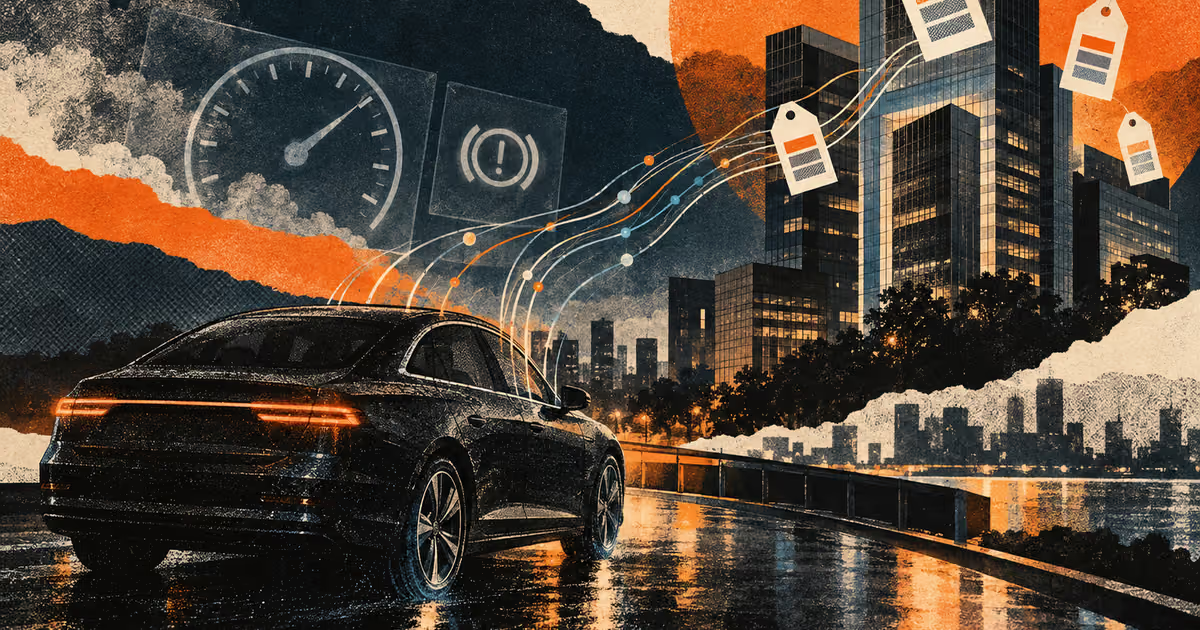
General Motors told drivers its Smart Driver program would help them drive more safely. According to 36 state attorneys general, it also turned their hard braking and late-night trips into a product for the insurance industry.
On Thursday, GM agreed to pay $220 million to settle the states' claims that it illegally sold drivers' behavior and location data to third parties, including data brokers, who then sold it to insurers. Those insurers could use it to change what people paid.
"People bought a car, not a tracking device," said Oregon Attorney General Dan Rayfield, who co-led the coalition with Washington's Nick Brown.
What the car was recording
OnStar Smart Driver ran from 2016 to 2024 and enrolled millions of drivers. It tracked how often people drove, when each trip started and ended, hard braking, fast acceleration, speeding, driving over 80 mph and driving late at night.
GM pitched all of that as a way for drivers to improve their own safety, and told them it would not share the data with insurers without express consent. The states say GM sold it anyway, under contracts with brokers that specified it was to be used for insurance products. TechCrunch names those brokers as LexisNexis and Verisk.
"Our investigation found GM sold that data anyway, and some drivers paid for it with higher premiums," Rayfield said.
Enrolled without knowing it
The most damning details concern people who never meant to sign up. Some drivers were enrolled by dealerships without their consent, the attorneys general say, because GM gave dealers an incentive to do it.
North Carolina's attorney general describes an even stranger failure. The OnStar app wrongly told more than 370,000 drivers they were not enrolled when they were. GM later quietly unenrolled them, never told them about the mistake, and left their data with the brokers and insurers.
Attorney General Jeff Jackson did not soften it, saying GM lied when it told drivers their data would stay private and lied again when it promised not to share it without permission. "Your data belongs to you, and you should be able to decide when and how it's shared," he said. In New York alone, more than 700,000 drivers were enrolled.
GM ended the program after a New York Times report on the practice more than two years ago. Its spokesperson, Charlotte McCoy, told The Verge that "this agreement addresses Smart Driver, a product we ended in 2024, and reinforces steps we've taken to strengthen our privacy practices."
What GM has to do now
Under the deal, GM must get express consent before collecting or disclosing driving and location data, and limit the driving data it collects. It also has to run a comprehensive privacy program, an in-house privacy assessment program and a third-party assessment, plus oversee and train its dealerships.
The third-party assessment is the new part, according to TechCrunch. The other terms match earlier deals with California and the FTC, and GM paid $12.75 million to settle similar claims in California just months ago.
The money gets split across the states. Washington receives $12.3 million, New York $12,054,341 and North Carolina $7,657,771.
Smart Driver is gone, but the wider problem is not. A Northeastern and Consumer Reports study found all 21 cars it examined sent data to third parties, and seven companion apps shared VINs and precise locations with ad networks. A car can leak a lot about its owner without any insurance contract involved.
Some offers on this page may be paid placements or contain affiliate links.
Subscribe to Techpresso
Free daily newsletter, read in 5 minutes.
Subscribe free