
Florida Attorney General Asks Court to Halt ChatGPT Development Over Child Harm Claims
Florida's attorney general wants a court to stop OpenAI from building new models without outside safety approval and to make ChatGPT stop acting like a human friend to kids.
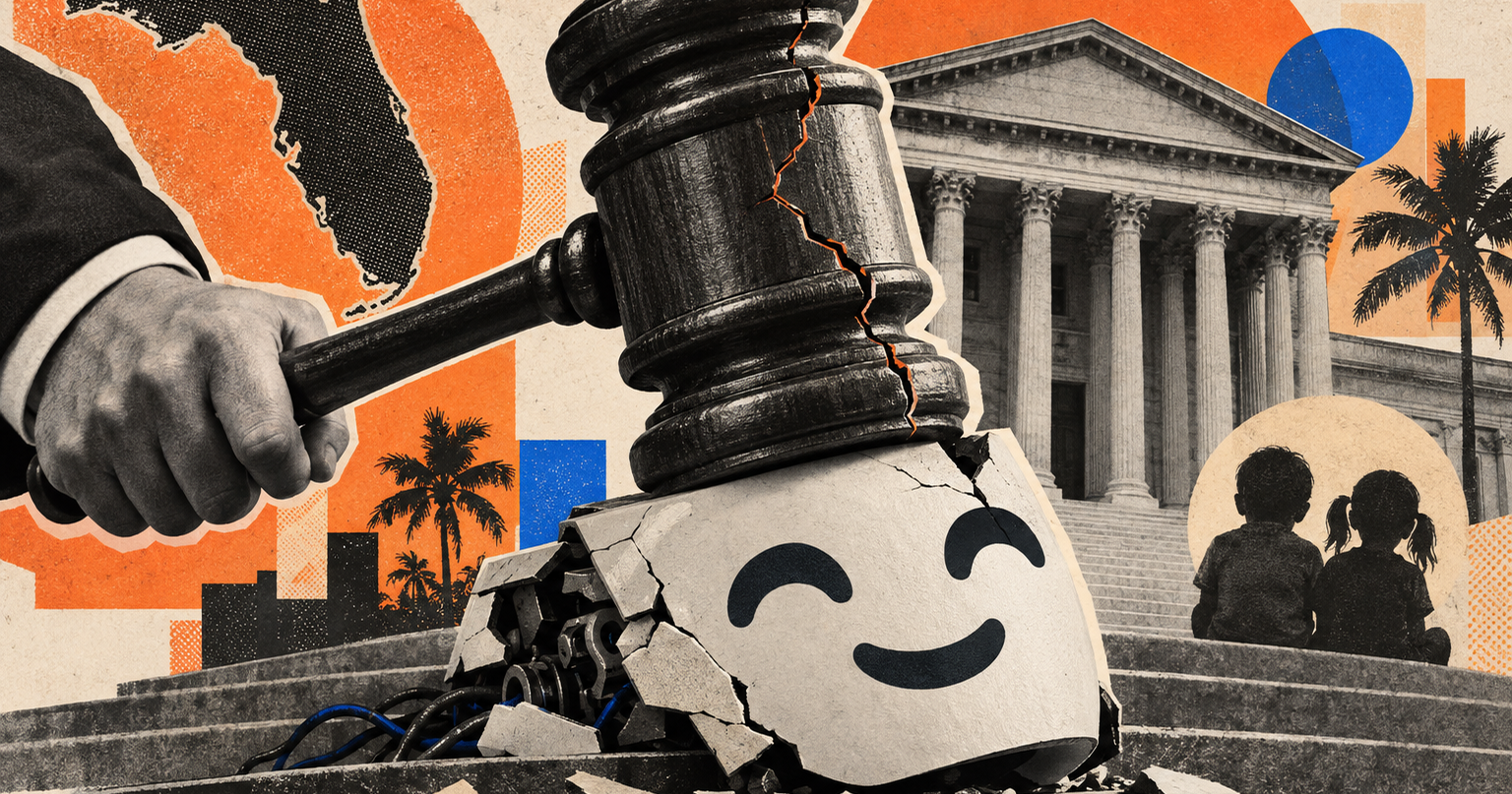
Florida wants a judge to put the brakes on OpenAI. Attorney General James Uthmeier has asked a state court to block the company from developing new AI models until they carry safety guardrails approved by a third party, a remarkable demand aimed at the maker of the world's most popular chatbot.
The request is a motion for a temporary injunction filed in the lawsuit Florida already brought against OpenAI in June under the state's Deceptive and Unfair Trade Practices Act. No judge has ruled on it yet. But the ask itself goes far beyond the usual fines and consent decrees that states chase in consumer cases.
"Stop pretending it's human"
The second half of the motion targets how ChatGPT talks. Uthmeier wants the court to stop the chatbot from using first-person pronouns and emotional mimicry, which he argues deceptively present it as a trustworthy friend to children. His theory is that the warmth is a product decision: a bot that feels like a buddy keeps kids chatting longer, and those conversations feed engagement numbers and training data.
He put it bluntly in a video announcing the filing. "Stop calling it safe. Stop pretending it's human. Stop selling it to kids."
To argue that the danger is bigger than chat, the motion points to AI agent security incidents at Hugging Face, an Australian government site and US government websites, along with warnings from researchers and former OpenAI employees. Agents misbehaving on public infrastructure has become a live policy fight, and regulators in Washington have already signaled they won't accept the "rogue agent" excuse from companies.
OpenAI says it already hit pause
OpenAI's response contains a surprising detail. Spokesperson Drew Pusateri said the company paused training its most capable models on Friday and will resume only once additional safeguards are in place. He added that OpenAI wants pragmatic AI rules that apply to the whole industry, not just one company.
That framing matters for the case. OpenAI is effectively telling the court that the extraordinary relief Florida wants is unnecessary, while signaling that a single state singling out one lab is the wrong way to regulate.
The kids question is also not new territory for the company. OpenAI launched ChatGPT for Teens last month with restrictions switched on by default. Florida's filing suggests the state doesn't think those defaults go nearly far enough.
What happens next is up to a Florida judge. Even if the injunction is granted, it would bind only OpenAI and only through this state case. It would not amount to a national ban on AI development, but it would be the first time a court ordered a frontier lab to wait for outside sign-off before building its next model.
Subscribe to Techpresso
Free daily newsletter, read in 5 minutes.
Subscribe free