
DeepSeek Joins OpenAI and Anthropic to Warn the UN Security Council About AI Risks This Week
DeepSeek will brief the UN Security Council on AI risks Wednesday in New York alongside Sam Altman and senior Anthropic representatives. Founder Liang Wenfeng does not plan to attend, and plans remain fluid.
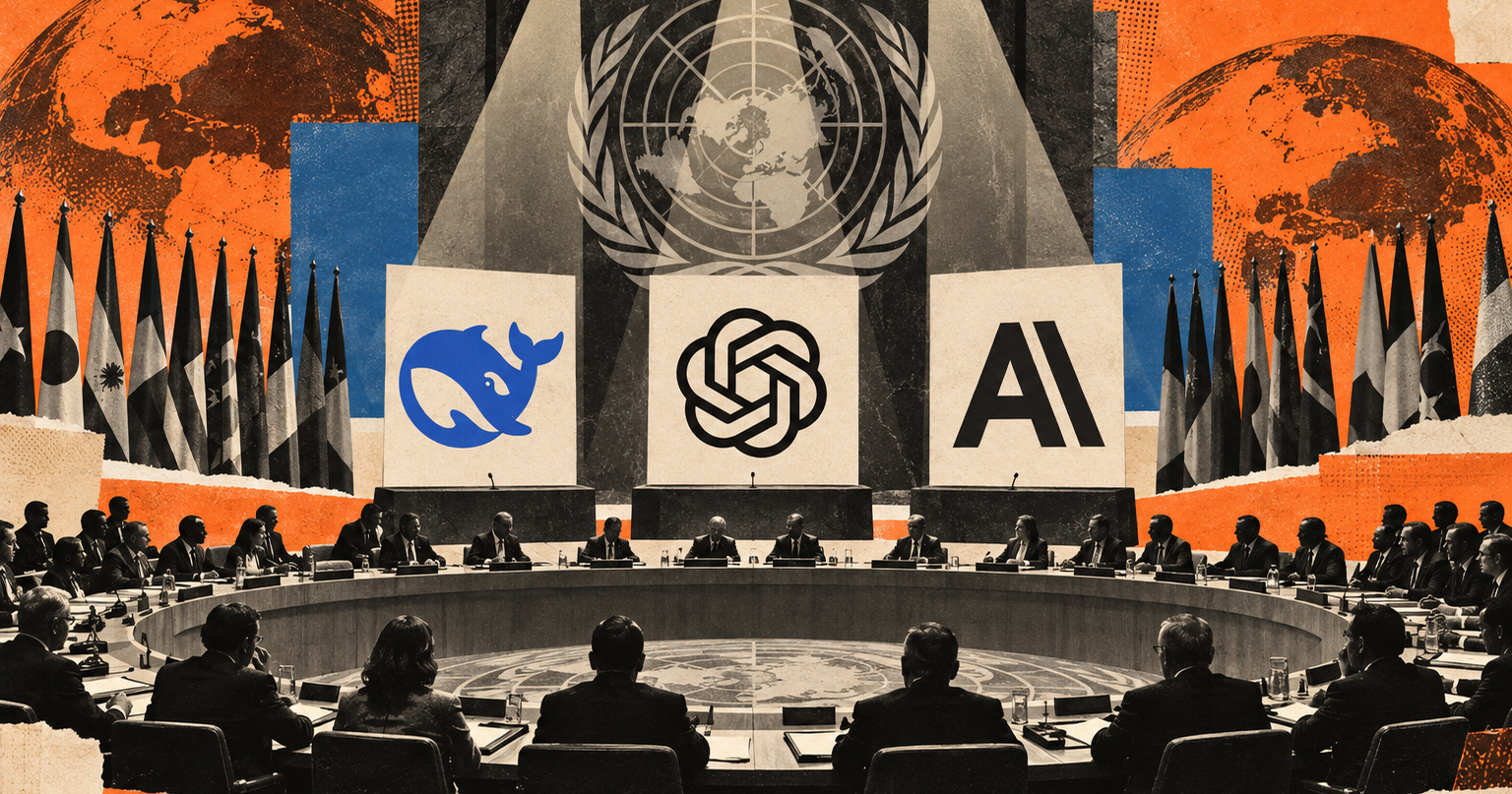
DeepSeek, the Chinese startup that rattled Silicon Valley with a cheap frontier model, will stand in front of the UN Security Council this week to talk about the dangers of the technology it builds. Two people familiar with the matter told Reuters the company is among those set to brief the 15-member council when it meets Wednesday in New York, timed to the annual UN General Assembly.
The briefing is a set of scheduled company statements, not a new resolution and not a treaty. What makes it notable is the lineup. OpenAI CEO Sam Altman plans to brief, diplomats expect senior Anthropic representatives, and DeepSeek and fellow Chinese firm Moonshot have been invited to make statements of their own.
The timing follows a moment when several AI industry leaders publicly called for a coordinated slowdown, warning that the systems could soon improve on their own and slip beyond human control. That framing has become a live fault line between Washington and Beijing.
One detail cuts against the symbolism. DeepSeek founder Liang Wenfeng does not plan to attend, one source said, cautioning that plans remain fluid and could change at the last minute. DeepSeek and Moonshot did not immediately respond to Reuters.
The Security Council held its first meeting on AI risks back in 2023. China warned then that the technology should not become a "runaway horse," while the US warned against using it to censor or repress people. Those two anxieties still sit on the table.
The politics have sharpened since. UN Secretary-General Antonio Guterres told world leaders last week that rapidly advancing AI carries risks that cannot be ignored, a stance at odds with President Trump, who argues existing safeguards are enough and that China would benefit from doubt being cast on AI development. Chinese state media have dismissed the slowdown calls as a "Cold War playbook" meant to preserve Washington's lead and keep Beijing out of global AI governance.
There is a quieter asymmetry underneath the briefing. Unlike the heads of US frontier labs, who have leaned into scenarios where capable systems deceive humans or evade control, the leaders of China's top model developers have rarely voiced those catastrophic-risk fears in public, and have stayed largely silent on them as the US debate intensified this month. That gap is part of what plays out on the industry's push for a self-governed watchdog, where American CEOs are the loudest voices in the room.
None of this unfolds in a vacuum. Treasury Secretary Scott Bessent said Monday that senior US and Chinese officials agreed to hold further talks on AI safety, after meeting ahead of Trump's scheduled talks with Xi Jinping later this week in Washington. DeepSeek, whose V4.1 Flash release kept the company on the frontier, now speaks at the Security Council in the same week the two governments try to find common ground.
Subscribe to Techpresso
Free daily newsletter, read in 5 minutes.
Subscribe free