
Apple and Google Are Pitching States Kids' Safety Bills That Would Shield Their App Stores From Lawsuits
The bills Apple and Google lobbyists are shopping to states would put kids' age checks at the app store door. The catch: families could not sue the companies over those rules.
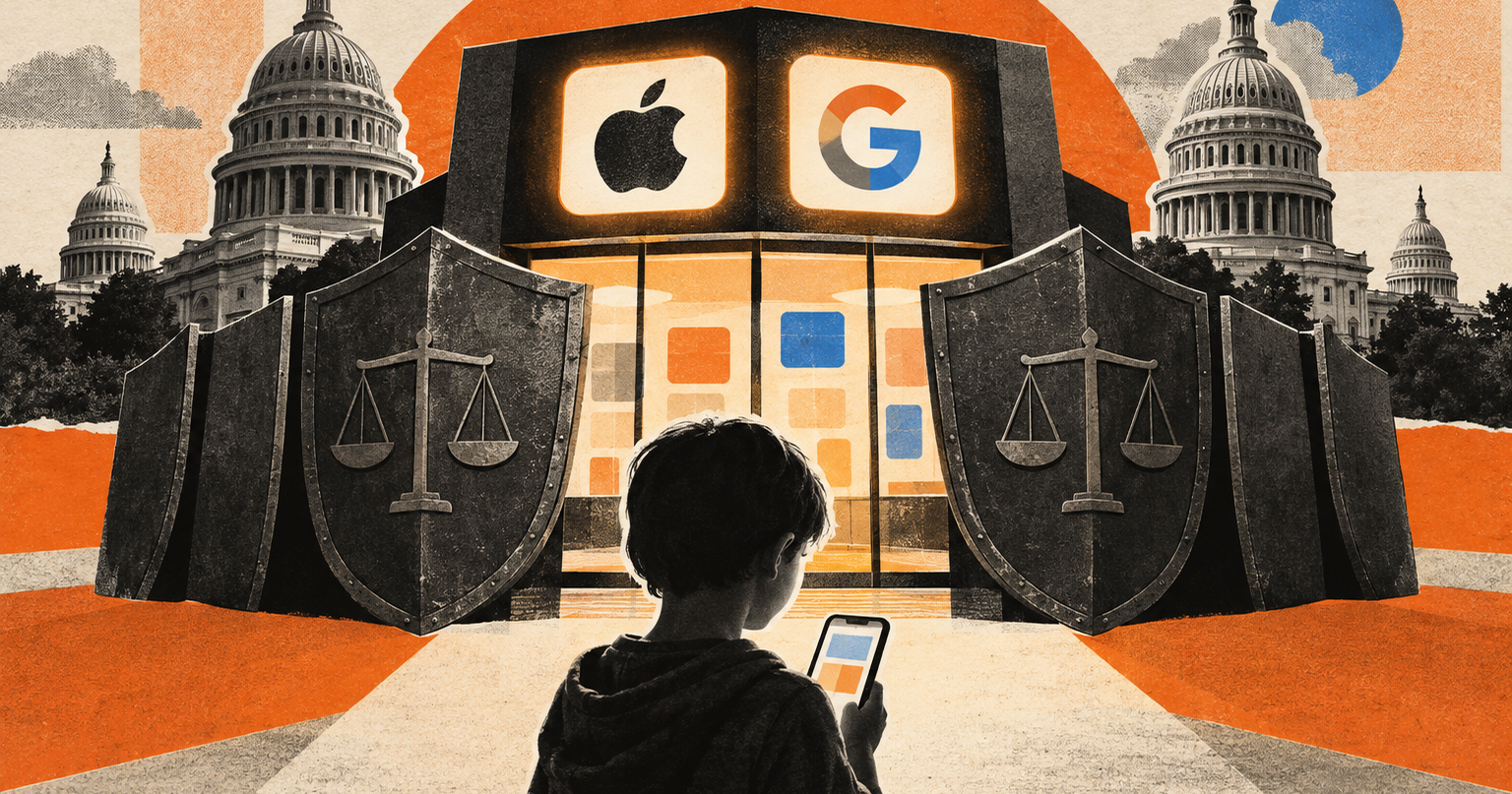
Apple and Google run the front door of nearly every smartphone in America. Now their lobbyists are quietly asking state lawmakers to make them the bouncers for kids' safety, on one condition: nobody gets to sue them when the bouncer screws up.
The effort, previously unreported, surfaced in Politico's reporting, built on draft legislation, internal emails and interviews with seven people who know about the campaign. With kids' online safety stuck in a stalemate in Washington, the two companies have taken the fight to state houses instead.
The pitch
The model bills Apple and Google are shopping would require age checks before apps get downloaded. They would also bar private lawsuits over those rules, leaving enforcement only to state attorneys general. Parents could not take the companies to court over a violation of those rules.
The age checks themselves are soft. The proposals largely rely on users self-attesting their age, which child safety advocates point out a 13-year-old can beat by typing a different birth year. Unsurprisingly, the bills are getting pushback from parts of the tech safety community.
Meta's rival plan
The bills are a counterpunch. Meta has been lobbying for the App Store Accountability Act (ASAA), which forces app stores, not apps like Instagram, to verify users' ages and get parental consent before minors download apps or make purchases. It also puts substantial legal liability squarely on Apple and Google.
ASAA versions were introduced this year in Georgia, Arizona and Kansas, and versions have already passed in Utah, Louisiana and Alabama. Those laws now face lawsuits from tech industry groups arguing they violate minors' First Amendment rights by putting apps behind a wall of parental approval.
ASAA has its own critics. It calls for "commercially available methods" to verify age, such as looking at which apps someone has downloaded before, and privacy-minded lawmakers and groups say that could compromise minors' information.
So the fight boils down to this. Meta wants the age-check burden, and the liability, dumped on the app stores. Apple and Google are willing to take the job, just not the courtroom exposure that comes with it.
Why lawsuits are the whole game
The litigation stakes are enormous. Big Tech is already facing hundreds of lawsuits from people who say they or their children were harmed by platform design, and every new state age-verification law opens fresh avenues to sue. That fight is already reaching courtrooms, as in the TikTok teen mental health trial in Alabama.
Meta knows the cost firsthand. Four states (California, Colorado, Kentucky and New Jersey) are seeking $1.4 trillion in penalties over claims it designed Facebook and Instagram to addict young users, in a case before US District Judge Yvonne Gonzalez Rogers in Oakland. A New Mexico jury found Meta liable for $375 million earlier this year.
Against that backdrop, a law that makes app stores the gatekeeper while taking private lawsuits over the rules off the table would be a very good deal for the gatekeepers. Age checks are becoming unavoidable anyway, as platforms like Discord rolling out age estimation without ID show. The question in state capitols now is who pays when they fail.
Apple and Google want the answer to be: not them.
Subscribe to Techpresso
Free daily newsletter, read in 5 minutes.
Subscribe free