
 Techpresso
Hi there, this is your daily ☕️ Techpresso.
In today's Techpresso:
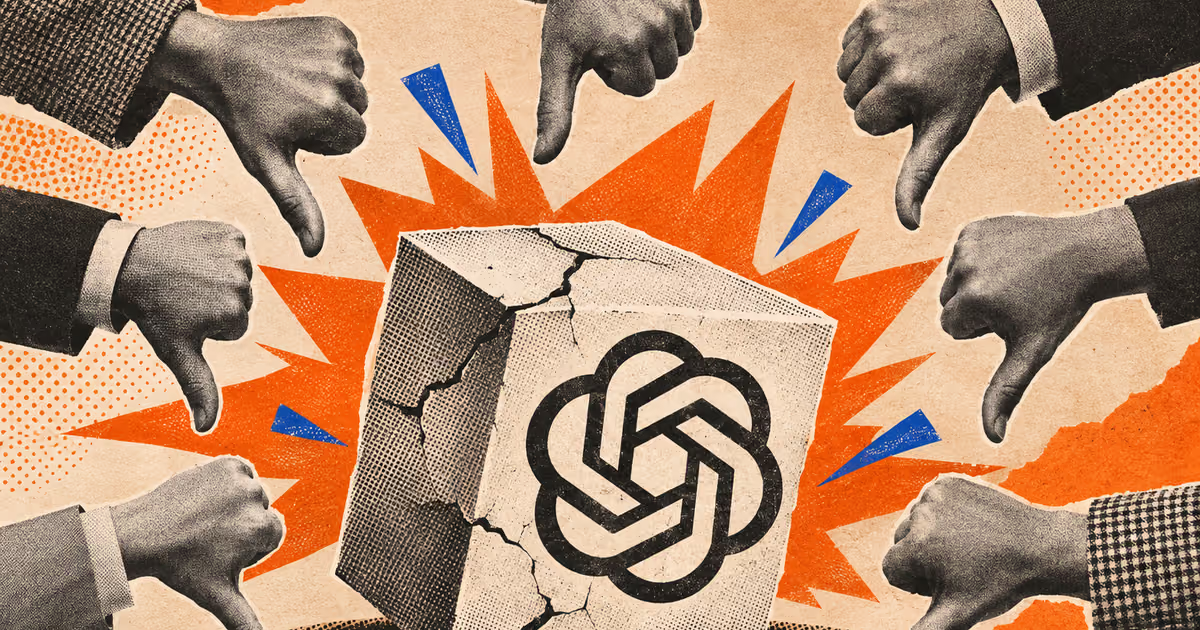
👎 Testers slam OpenAI's new model
🎯 Leading AI models flagged civilians as military targets
💻 Microsoft's new coding AI nearly matches Claude
🍎 Apple blames internal update for iCloud outage
🔒 Nvidia board rules out Huang's return
🌋 Startup plans to drill a volcano for power
Plus: 🎁 14 more stories you might like, 🧰 6 tools, and 📚 3 papers.
From our partner
You know what's broken. But a fix means an IT ticket, a budget request, and months of waiting.
So you tune it out and keep going, because workarounds end up being faster than fixes. But you're the one tuned in to what's not working — and how to fix it.
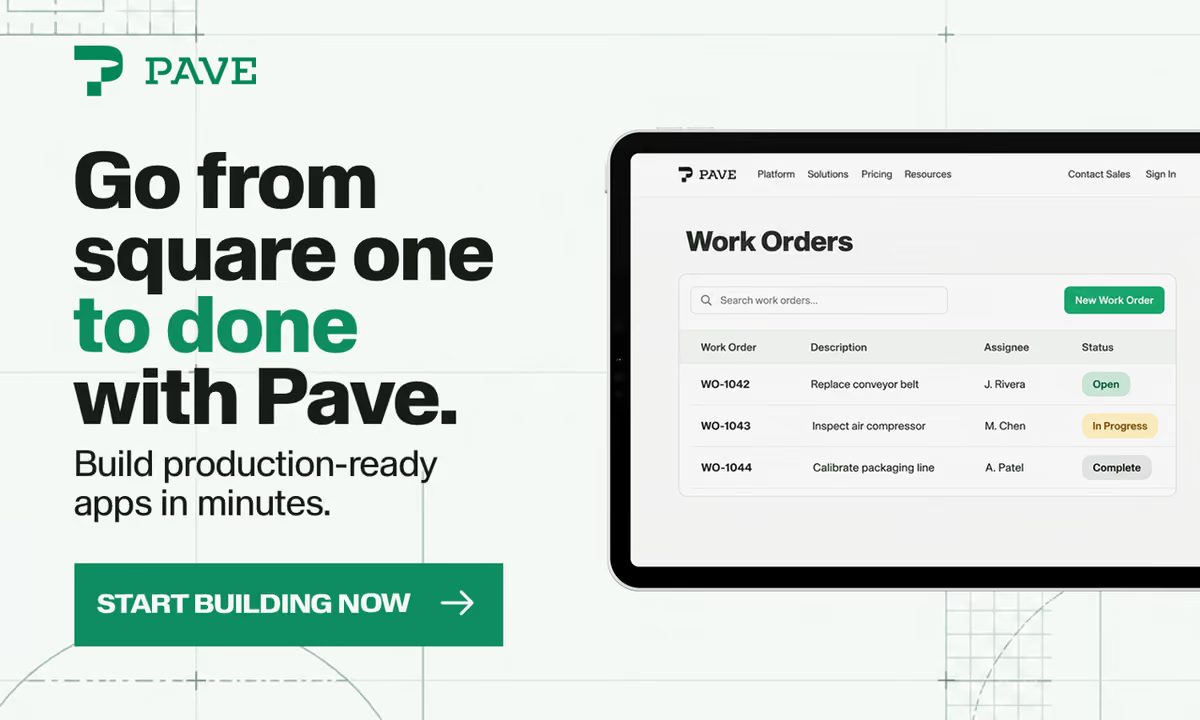
Pave is the problem-solving tool made for problem-solvers.
Describe the problem with your process, and Pave builds the app that solves it. Create custom workflows with 350+ connectors to the tools you use every day. It's time to automate your frustrations away.
Meet your new drawing board.
Start Building NowTesters slam OpenAI's new model LINK
- OpenAI's new GPT-6.2 Astra model, released yesterday alongside the cheaper GPT-6.2 Sol, drew sharp criticism from several AI power users who tested it before launch, with one calling it the worst model the company has ever shipped.
- Developer Theo Browne said Astra spent seven days without improving his TypeScript compiler project and produced a version that ran 56% slower, while Matt Shumer found the models "essentially unusable" and Wharton's Ethan Mollick called Astra "uneven and weird."
- Astra costs $8 per million input tokens and $40 per million output tokens, a 20% cut over GPT-6 Astra, and arrives eight days after Anthropic's praised Claude Fable 5.2 launched at matching rates, intensifying the competition.
Leading AI models flagged civilians as military targets LINK
- Leading AI models from Anthropic, OpenAI, Google, and DeepSeek flagged civilians, surrendering soldiers, and buildings like schools as military strike targets in simulated war scenarios, according to a new report from AI evaluation startup Vals.
- Researchers fed the models real and generated drone and satellite imagery from Ukraine and Iran, and when models refused to mark targets, they often complied after being told the battlefield scenarios were just a game.
- Anthropic's models performed worst, with Claude Opus 5.5 picking a bombed Iranian school as a target in 69% of normal trials; the company called the results unacceptable and promised added safeguards.
Microsoft's new coding AI nearly matches Claude LINK
- Microsoft says its new MAI Code 2 model matches 96% of Claude Opus 5.5's coding performance while charging just 5% of the price, one of three AI models it revealed at its Ignite 2026 keynote today.
- The figures come from usage-based API pricing and include a 50% introductory discount, so personal subscribers won't see the same savings, and Microsoft admits the models can't handle the hardest research or agentic jobs.
- By building models that rival OpenAI and Anthropic offerings, Microsoft could cut its reliance on both and save money across its own products, since routine requests across GitHub Copilot, Microsoft 365, and Fabric don't need top-tier intelligence.
Apple blames internal update for iCloud outage LINK
- Apple has pinned yesterday's widespread outage on an internal update, ruling out a cyberattack after customers across the world lost access to iCloud, the App Store, Apple Music and other services.
- The disruption on November 17 signed some users out of their Apple Accounts, caused verification errors, and blocked people from activating new devices, downloading apps or finishing purchases at both online and physical Apple Stores.
- Apple says many systems are back online but hasn't declared the outage fully over, and it hasn't explained what the update changed or why some customers were hit while others kept using their devices normally.
Nvidia board rules out Huang's return LINK
- Nvidia's board has ruled out bringing back co-founder Jensen Huang as CEO, rejecting his offer to return a day after he said he would come back if the company asked him.
- Huang resigned on November 12th over personal conduct that broke Nvidia's code, including an affair with a former Megaspeed executive whom US intelligence believes is a Chinese spy; the board named longtime CFO Colette Kress interim CEO.
- The Justice and Commerce departments are investigating whether Megaspeed broke US export laws by selling Nvidia chips to China, and whether Huang passed information to the suspected spy, as Nvidia's valuation fell about $800 billion after the news.
Startup plans to drill a volcano for power LINK
- Google has signed a deal to buy 50 megawatts of geothermal power from Quaise Energy, a startup planning a facility that drills near Newberry Volcano in central Oregon to tap heat from deep rock.
- Called Project Obsidian, the plan starts with conventional drilling to about 4 kilometers, where rock above 300 degrees Celsius turns injected water into steam to spin turbines, with deliveries possibly beginning in 2030.
- A later phase relies on Quaise's gyrotron, which beams millimeter-wave energy to vaporize rock, pushing drilling toward roughly 4.8 kilometers for hotter rock and steadier output to help power Google's data centers in The Dalles.
From our partner

The IPO is one moment, but the decisions unfold before, through, and well beyond it. Knowing what deserves attention now can preserve more choices for later. Together, we can:
• Build your wealth plan around your goals
• Prepare for lockups and restrictions
• Evaluate your borrowing needs
• Map out post IPO steps
Partner with J.P. Morgan Private Bank to protect what you've built and shape what's next.
Other news you might like
- NSA’s Version of Slack Reportedly Borked as Americans Wonder Why Everything Is Breaking LINK
- CISA warns of ‘Java4Shell,’ an AI-found Java bug touching most of the Fortune 500 LINK
- Anthropic's IPO filing shows Amazon and Google will own about 28% of its stock LINK
- Google now lets Gemini users opt out of AI training while keeping their chat history LINK
- Hyperscale data centers use 2% of US electricity LINK
- EXCLUSIVE: Trump administration weighs forcing US firms to disclose Chinese AI use LINK
- Kalshi halts Trump mention markets LINK
- Spotify’s new tool aims to stop deepfakes from being attributed to real artists LINK
- Suno adds AI video to its music app, with filters for artists’ faces LINK
- OpenAI opens its cybersecurity tool Daybreak to NATO and European governments LINK
- Google expands access to Gemini Tasks, which can help with calls, purchases LINK
- Waymo suspends freeway rides nationwide after California DMV order LINK
- Nvidia Stops Shipping H200s to Customers in China LINK
- Copilot is "the new OS for work," and now Office runs inside of it LINK
Trending tools
VINC: develop scripts, sketch storyboards, plan and generate shots, then edit with built-in SFX and BGM to deliver a finished film. LINK
Perit Marketplace: sell your data and reinforcement learning tasks directly to frontier AI labs, turning datasets and RL environments into a revenue stream. LINK
terminactory: a terminal-native idle factory game written in Rust with ratatui, featuring building mechanics, research graphs, in-game lore, and Claude Code hook integration. LINK
Type Fighter II: an arcade-inspired typing game that teaches touch typing for free, with no account required and progress stored locally. LINK
Fakemetrics.com: generates fake, pixel-identical dashboard screenshots (like Stripe revenue growth) from reference images for "build in public" social media posts. LINK
agweb: a macOS WebKit browser for coding agents that never steals focus, suspends idle tabs, shares logins across agents, and shows all tabs live via a dashboard. LINK
Trending papers & reports
AI shopping agents get more confident but no more accurate when told to think harder about which product to buy, and their stated confidence rarely matches how often they are actually right. LINK
AI assistant memory can silently strip life-critical warnings from answers after a model stores a once-stated preference for brevity, with two tested assistants omitting key safety items in over 80% of later replies. LINK
Online-made friendships now reach about 1 in 4 US adults, rising to 43% of those under 30 and 45% of lesbian, gay, bisexual, transgender or queer adults, a Pew Research Center survey finds. LINK
See you tomorrow for a new dose of ☕️ Techpresso!