

Hi there, this is your daily ☕️ Techpresso.
In today's Techpresso:
🕵️ Engineer accused of bugging OpenAI's office
🛰️ Ukraine says SpaceX capped Starlink drone speed
🔌 400+ AI scientists demand containment rules
⚙️ ASML can't meet AI chip-tool demand
📱 Facebook lets you reshape your feed
👁️ Neuralink co-founder's chip restores vision in first patient
Plus: 🎁 15 more stories you might like, 🧰 6 tools, and 📚 5 papers.
From our partner

Every team is being asked to roll out AI agents, but agents don't fit into human or machine identity models.
So how do you authenticate them, scope their access, and govern what they can do, at scale?
Watch this on-demand webinar to learn:
• Why identity models break down for autonomous agents
• The security foundations that matter: authentication, access control, delegation, and governance
• Hard-won lessons from powering identity for 1000+ MCP servers and millions of monthly agentic transactions
Rohit Ganguly, AI Product Manager at Descope, walks through what it takes to secure agents in the enterprise.
Secure your agents before they scale. Watch the webinar now.🕵️ Engineer accused of bugging OpenAI's office LINK
- OpenAI used its own AI models to trace a hidden recording device found in an executive conference room, helping identify and catch the engineer who allegedly planted it in the company's office.
- The accused, 35-year-old Saudi national Abdulrahman Alfozan, was arrested after security found the device plugged into a TV's USB port around September 28, plus a second recorder in a bag holding his wallet and ID.
- The device had encryption, audio monitoring, and a hidden data transfer method; FBI Director Kash Patel said it was likely meant to capture sensitive talks about OpenAI's superintelligence work, though the full purpose stays unclear.
🛰️ Ukraine says SpaceX capped Starlink drone speed LINK
- Ukraine says SpaceX quietly throttled its Starlink service overnight, limiting the speed of military terminals used for drone strikes and frontline communications, according to defense ministry sources and a top presidential advisor.
- Serhii Beskrestnov, an advisor to President Zelenskyy, said SpaceX capped Starshield, the company's military satellite network, so it slows down above 100 miles per hour, and that Kyiv's military got no warning beforehand.
- Beskrestnov offered no evidence but suggested the slowdown ties to US-Ukraine tensions, coming after Elon Musk said Zelenskyy had "gone too far" with strikes on Russian refineries and amid recent Russian missile attacks on Kyiv.
🔌 400+ AI scientists demand containment rules LINK
- More than 400 AI researchers, including Yoshua Bengio and Geoffrey Hinton, signed an open letter urging the industry to build stronger containment for AI, warning that weak safeguards have already led to serious security failures.
- The letter makes three asks: that firms running "cyber-capable" models wall them off from outside networks, that a new international body set containment standards, and that all containment failures be reported to that body and made public.
- The call follows OpenAI's July breach of Hugging Face and other lab incidents, and arrives as Anthropic cofounder Jack Clark now predicts self-improving AI could arrive in 2027, a year sooner than he earlier thought.
⚙️ ASML can't meet AI chip-tool demand LINK
- ASML, the Dutch maker of chipmaking machines, says its supply plans fall short of demand for 2027 and 2028, with some customers already asking to place orders stretching into 2029 and 2030.
- Chief executive Christophe Fouquet said buyers ask for more tools every day, and the company is looking past the 30% extra capacity it planned for 2027 and the further 30% it was studying for 2028.
- ASML raised the low end of its 2026 sales guidance to between €44B and €45B, its shares rose 2.8% to about €1,552 in Amsterdam, and China still makes up roughly a fifth of this year's revenue.
📱 Facebook lets you reshape your feed LINK
- Facebook has rolled out a feature called "Your Algorithm" that lets users shape what shows up in their Feed and Reels by describing in plain language the topics and posts they want to see more or less of.
- Meta says the AI-powered tool updates recommendations in real time and may ask follow-up questions to learn what people liked or disliked, letting them give more detailed feedback about their preferences.
- The company also reworked Facebook's three-dot menu so people can open "Your Algorithm" or tap "Interested" and "Not interested" straight from individual posts, following similar tools on Instagram and the "Dear Algo" feature on Threads.
👁️ Neuralink co-founder's chip restores vision in first patient LINK
- Science Corporation, led by Neuralink co-founder Max Hodak, has placed its PRIMA vision chip in a first patient with Stargardt disease, an inherited condition that destroys central vision and is currently considered incurable.
- The 2mm-by-2mm chip sits at the back of the eye and acts like artificial light-sensing cells, working with camera glasses; the patient, implanted in May at Sydney Eye Hospital, saw a letter and later read a word during rehabilitation.
- Hodak said the current black-and-white view is sharp but narrow, like looking through a straw; a next version should reach humans within a year, with near-normal sharpness possible over five years as implants grow and electrodes shrink.
From our partner
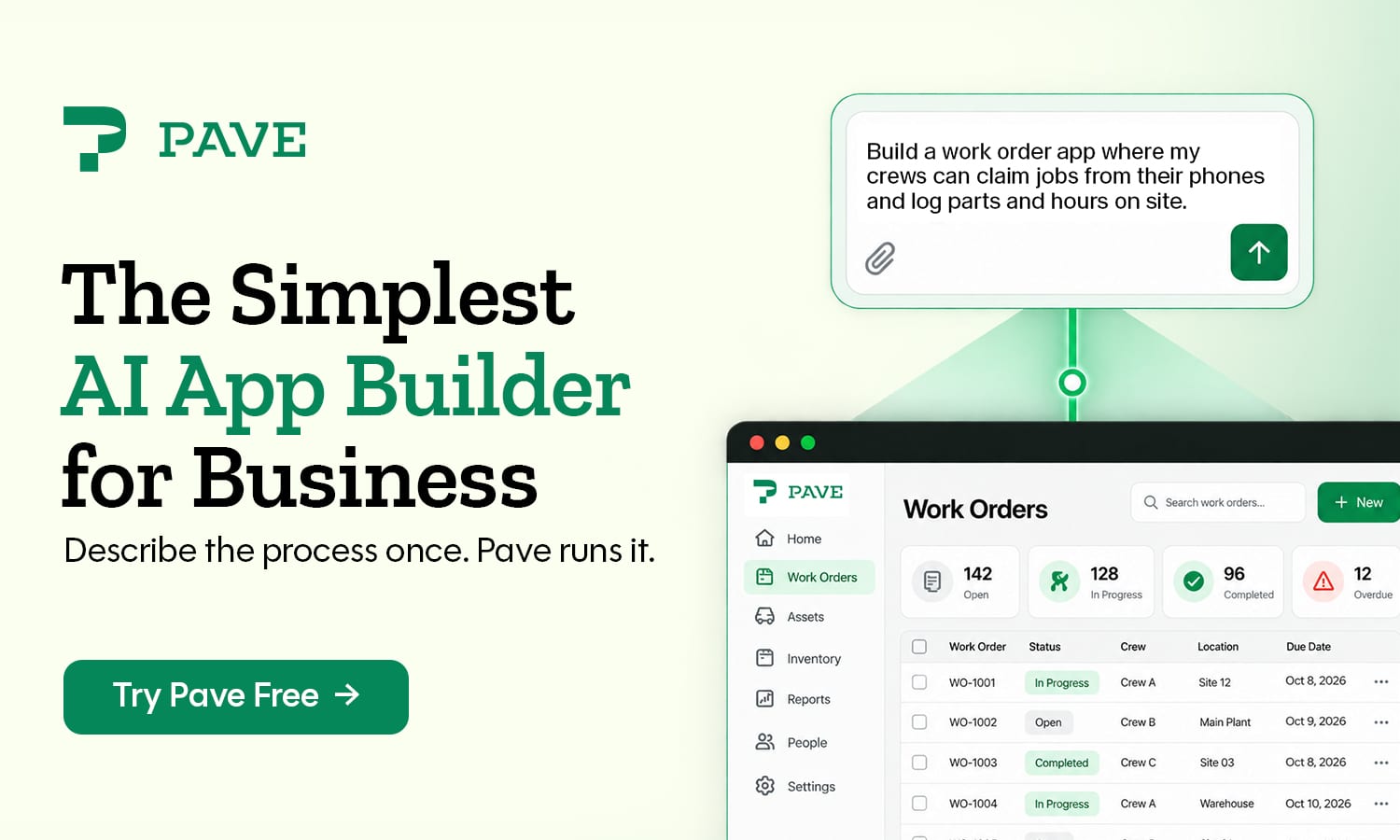
You already know how the work should happen. Now you can build it.
Pave is the simplest AI app builder for business.
Describe your process in plain language, or upload the spreadsheet it runs on today, and in minutes you have a working app with the data model, roles, and automation already in place.
Connect to 350+ tools you already use. Stop carrying the operation and start leading it.
Start BuildingOther news you might like
- Qualcomm wins lawsuit against Arm but will only receive two bucks LINK
- JPMorgan is blocking outside AI agents from accessing customer accounts LINK
- Microsoft forms ‘Xbox Labs’ to explore game remixes, ports and other new frontiers LINK
- Bumble agrees to be bought by Ithaca Holdings for about $1.3bn LINK
- Meta to notify 1,500 users after stolen employee credentials expose GitHub repositories LINK
- Epic says its new 'vibe coded' Epic Games Store launcher is faster than Steam LINK
- China clears Alibaba’s Qwen AI just in time for iPhone Duo LINK
- Apple researchers turn idle Macs into a virtual GPU cloud with ‘Minions’ LINK
- SpaceX wants to go from 25 Starship launches a year to 456. The FAA is checking the environmental cost LINK
- Google wants to host your personal vibe-coded apps in the Play Store LINK
- Judge orders OpenAI to turn over hiring records in Apple trade secrets case LINK
- Silicon Valley, seen from Beijing LINK
- Netflix to cut about 6% of worldwide staff LINK
- Japan to invest up to $21 billion in two US chip factories to be run by GlobalFoundries LINK
- Google launches flagship AI model Gemini 4 Argon for developers, businesses LINK
🧰 Trending tools
Genchi: predicts project deadline risk by collecting anonymous one-click confidence votes from engineers via automated Slack prompts, helping leaders intervene early. LINK
vibesmonitor: tracks traffic, errors, user feedback and cookie consent across all your projects on one screen, prioritizing what needs attention first via a single script or MCP agent query. LINK
Apple HomePod mini 2: compact smart speaker with room-filling audio, Siri voice assistant, and smart home controls, designed with privacy and security in mind. LINK
Nimble: decision-making AI models that improve routing accuracy and cut errors by 43% versus Jev, with a free console to try. LINK
Epherem: free security scanner for AI-built apps that flags vulnerabilities like exposed API keys from a ZIP or GitHub repo, with fixes for each issue. LINK
Winq: switch window focus with your gaze, click by winking, and trigger shortcuts via face gestures, all running privately on your Mac's built-in camera. LINK
📚 Trending papers & reports
Prompt-injection attack library compiles over 200,000 real attacks from an email assistant red-teaming contest, showing that even defense-trained models get tricked ~32 to 58% of the time, far more than older tests suggested. LINK
Measuring meaning in messages offers a new math for scoring how informative a statement is, fixing a long-standing flaw where contradictions wrongly counted as maximally informative, now giving both contradictions and tautologies zero value. LINK
Reinforcement learning training gets a method that learns from fewer trial runs while needing lighter, simpler math, hitting the theoretical floor for how little practice an agent can get away with. LINK
Phase-aware attention speeds up how a model reads long documents before replying, cutting that reading step up to ~22x faster than standard Transformers while keeping answer quality intact. LINK
Graph generators fix a built-in flaw where networks built from scratch collapse into uniform random connections, instead preserving realistic hubs and structure, producing more lifelike synthetic networks without needing hand-crafted labels. LINK
See you tomorrow for a new dose of ☕️ Techpresso!