July 2, 2026·5 min read
☕️ OpenAI offers the US government a 5% ownership stake
OpenAI's US stake offer, SpaceX's AI phone device, and more.
Hi there, this is your daily ☕️ Techpresso.
In today's Techpresso:
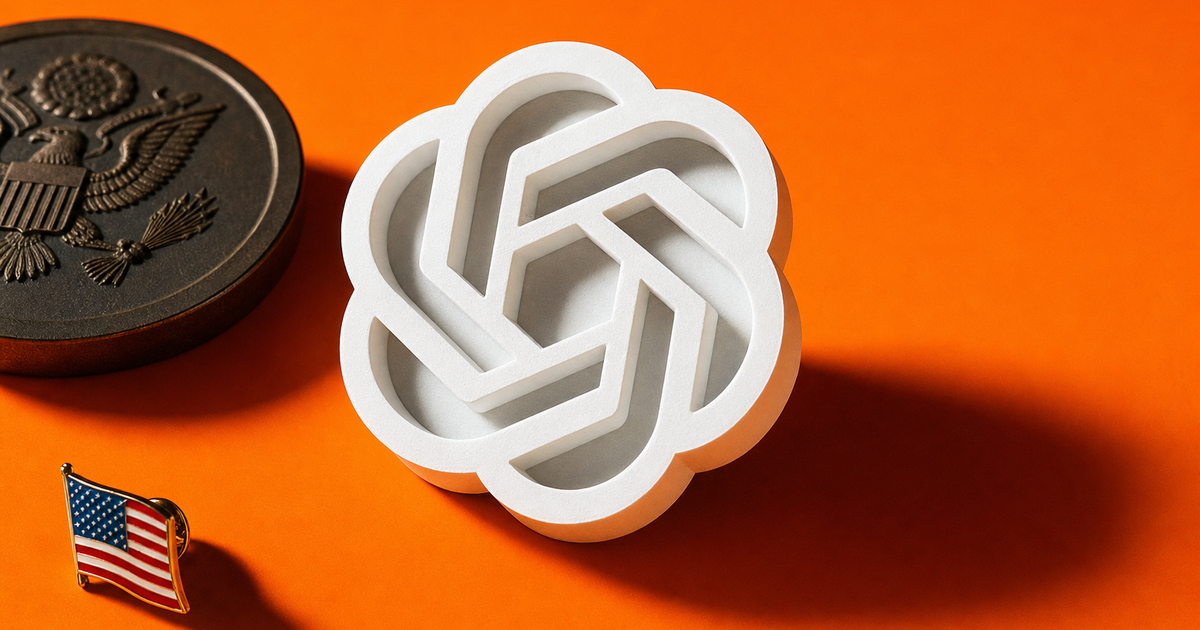
🏛️ OpenAI offers the US government a 5% ownership stake
📱 SpaceX showed investors a phone-like AI device
🤑 Apple wants to sell 10 million foldable iPhones
💰 Nvidia will trade compute for a cut of startups' profits
🍎 Apple in talks with two banned Chinese RAM makers after price hikes
Plus: 🎁 12 other news you might like, 🧰 5 tools, and 📚 3 papers.
🏛️ OpenAI offers the US government a 5% ownership stake LINK
OpenAI has offered the US government a 5% stake in the company, worth around $42.6 billion, as the ChatGPT maker tries to ease mounting political pressure in Washington, according to a Financial Times report.
The $42.6 billion figure is based on the $852 billion price that investors put on OpenAI three months ago, and Sam Altman reportedly wants Anthropic, Google and Meta to hand over a similar 5% cut too.
Altman has discussed the plan with President Trump, Commerce Secretary Howard Lutnick and Treasury Secretary Scott Bessent, but Senator Bernie Sanders dismissed it, instead wanting a one-off 50% tax on shares of OpenAI, Anthropic and xAI.
📱 SpaceX showed investors a phone-like AI device LINK
SpaceX reportedly built a prototype handset that runs on its own operating system and folds in AI from Elon Musk's xAI, showing the device to investors during a roadshow ahead of its recently completed IPO.
According to the Wall Street Journal, the device has a design slimmer than an iPhone and would use a Qualcomm Snapdragon chipset, though SpaceX told investors the project is early and might never reach production.
The prototype reportedly draws on the "everything app" concept Musk has pushed since buying Twitter, now X, and could give him a consumer platform for his companies' technology while cutting his reliance on outside hardware makers.
🤑 Apple wants to sell 10 million foldable iPhones LINK
Apple has raised its production target for the foldable iPhone Ultra to around 10 million units, roughly a third more than the 7 to 8 million units estimated in earlier reports, according to Nikkei Asia.
The foldable iPhone Ultra is expected to carry a premium price, with IDC predicting an average selling price of $2500 and storage options priced as high as $3000 when it arrives this year.
Apple is expected to unveil the iPhone Ultra in September alongside the iPhone 18 Pro and Pro Max, though the foldable model could launch after those Pro phones while still shipping during 2026.
💰 Nvidia will trade compute for a cut of startups' profits LINK
Nvidia is launching a partnership program that gives fast-growing AI startups access to compute power and token credits, and in exchange those companies will share a portion of their future product and cloud revenue with the chipmaker.
The program names two initial partners supplying the compute: Australia-based Sharon AI will deploy up to 40,000 Nvidia GPUs, while Firmus Technologies is building a data center in Batam, Indonesia that could house up to 170,000 GPUs.
Nvidia is positioning itself as an intermediary helping startups reach full-stack computing, a response to scarce GPU access and liquidity problems that have pushed AI firms into revenue and equity-sharing deals with chipmakers.
🍎 Apple in talks with two banned Chinese RAM makers after price hikes LINK
Apple is reportedly in negotiations with two banned Chinese memory makers, CXMT and YMTC, to buy RAM for products sold in China, a move that would likely need clearance from the United States government.
Both companies sit on the Pentagon's ban list, so Apple has been lobbying the Trump administration and Washington for permission before adding them as memory chip suppliers, according to reports from The Financial Times and Bloomberg.
The talks follow Apple raising prices on Macs, iPads, and other products in June, blaming a global memory shortage and higher component costs, though iPhone prices haven't gone up yet ahead of new models in September.
Other news you might like
- Google loses fight against record €4.1 billion EU antitrust fineLINK
- Microsoft unveils $2.5B ‘Frontier Company’ to embed AI engineers inside customersLINK
- Companies reverse AI-driven layoffs as human workers returnLINK
- The cost of the AI boom: Amazon emissions jump 16% as company stands by net-zero pledgeLINK
- Apple is reportedly planning new iPad Pro and MacBook Pro releases early next yearLINK
- Amazon is ready to deploy the Leo satellite broadband serviceLINK
- Scientists build synthetic cell that grows, divides and passes DNA to offspringLINK
- Amazon is designing its own AI chips for Echo, Fire TV and future devices, exec tells CNBCLINK
- The revolt against U.S. AI labsLINK
- Z.ai launches ZCode to challenge Cursor, Claude Code and GitHub Copilot in AI codingLINK
- Cloudflare wants to build the economic layer of the AI webLINK
🧰 Trending tools
Macro: combines email, messages, tasks, calls, docs, and CRM into one AI-powered workspace that filters noise and surfaces what actually matters.LINK
Flowly: a community-driven discovery platform where users share and explore unique products and finds from around the world.LINK
Solaris: a personalized outdoor health app that translates UV, pollen, and air quality data into actionable daily scores tailored to your body and sensitivities.LINK
Needle: a proactive go-to-market agent that lives inside Slack and Teams, keeping your GTM workflows organized without switching tools.LINK
Retrace: turns overwhelming Discord server conversations into searchable, summarized community intelligence using AI-powered trend detection and Q&A.LINK
📚 Trending papers & reports
Fine-tuning just one layer of a large language model with reinforcement learning can match or beat updating every layer, and the best single layer is almost always in the middle of the model.LINK
Fiction generation with chatbots is surprisingly common, with more than one third of real ChatGPT conversations involving stories, roleplay, fanfiction, or erotica, driven heavily by a small group of power users.LINK
A decade-old quantum computing conjecture was solved by an AI working with a mechanical proof checker, with humans only needed to confirm the problem was set up correctly before the machine took over.LINK
Want to get the latest news differently? Find us on:
See you tomorrow for a new dose of ☕️ Techpresso!


.png)

